Cultural Meaning Of Jesus Graffiti Urban Savior Tattoo Design
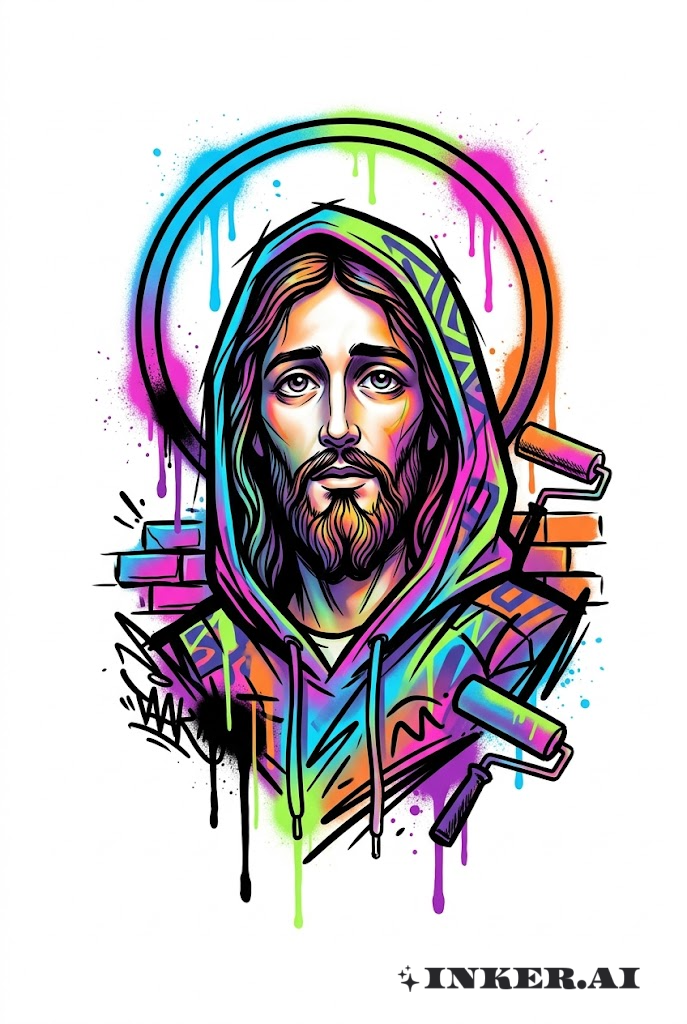
This image blends sacred portraiture with the aesthetics of the street to convey protection, resilience, and communal hope. The halo and crown imagery point to traditional markers of sanctity and sacrifice, while the layered spray-paint gestures and raw brick backdrop root the figure in an urban environment, suggesting a guardian presence within the city. Color choices—vivid primaries against dark outlines—evoke both urgency and clarity, hinting at themes of revelation and visible faith. By incorporating graffiti elements alongside classic iconography, the work comments on accessibility: the divine rendered in a language spoken by the neighborhood rather than a cathedral. Within contemporary tattoo culture, a Graffiti tattoo style communicates rebellion turned reverent, and for many wearers the piece joins broader Jesus tattoo ideas that highlight personal redemption, social solidarity, and a faith lived in everyday streetscapes.
Design Inspiration Of Jesus Graffiti Urban Savior Tattoo Design
The creative impulse behind this tattoo comes from mixing sacred portrait traditions with the immediacy of street art. Inspirations include stencil masters, freehand spray techniques, and bold poster lettering—combined with classical chiaroscuro used to model the face. The goal was to preserve the recognizability and dignity of the figure while translating it into the visual shorthand of urban walls: drips, tags, torn-paper edges, and layered color fields. This approach celebrates how public art reclaims space and turns familiar faces into neighborhood emblems.