Cultural Meaning Of Hegseth's Statue Of Blind Justice Tattoo Design
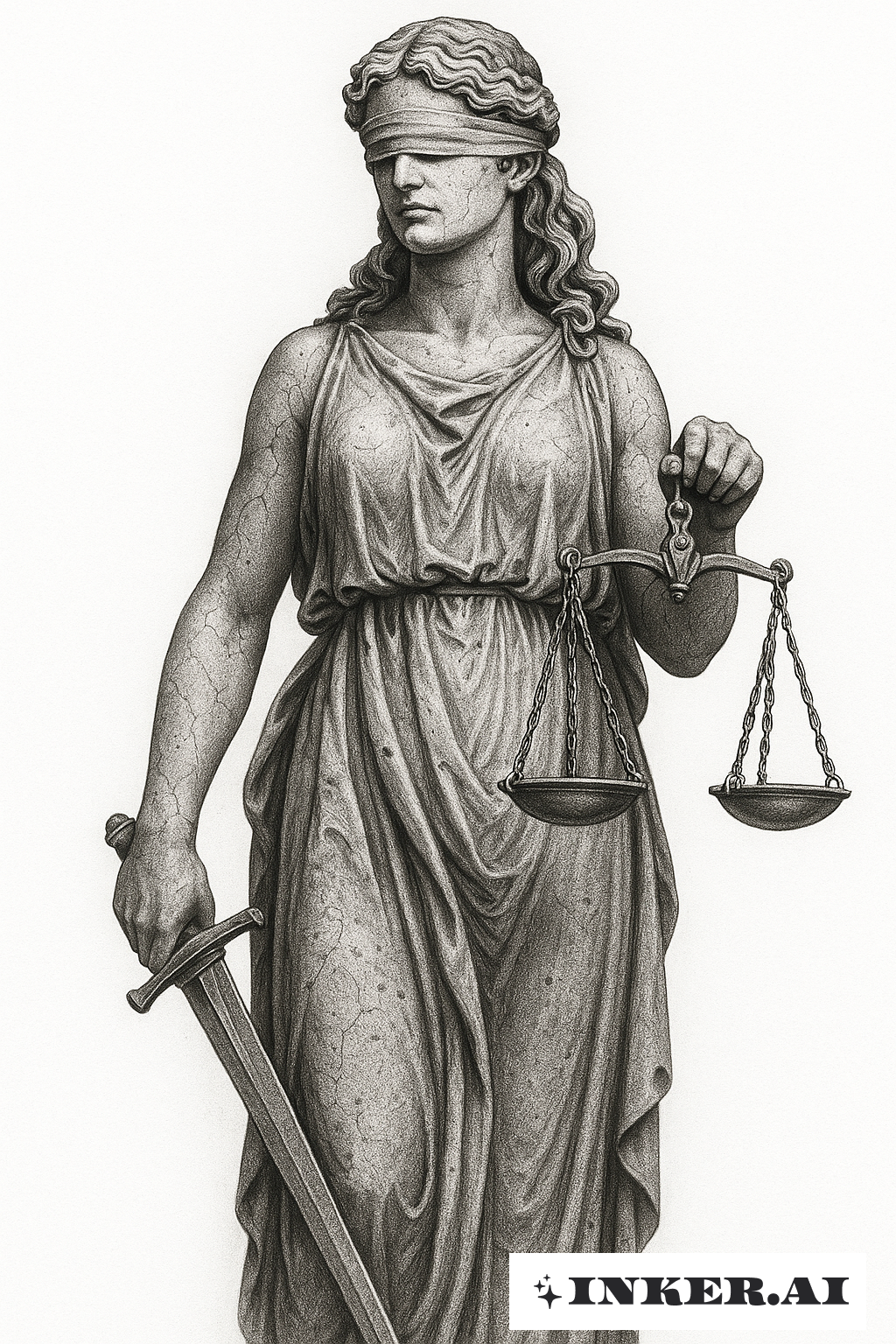
The image draws on long-standing associations of jurisprudence: the blindfold stands for impartiality, the scales for balance between competing claims, and the sword for authority and swift consequence. As a personal emblem, the figure can signal a commitment to fairness, a career in law, or a reverence for moral order. The classical posture and weathered textures evoke endurance and the timeless pursuit of truth, while the softness of the facial expression tempers severity with empathy, suggesting that justice is both firm and humane. Viewers may also read the statue as a meditation on accountability and the weight of decisions, where every tilt of the scales implies consequence. Rendered with an emphasis on believable form and atmospheric shading, this motif translates well across black-and-gray treatments and subtle color washes. Realism tattoo style and Hegseth tattoo ideas help frame the piece as a statement that blends historical symbolism with contemporary ink techniques.
Design Inspiration Of Hegseth's Statue Of Blind Justice Tattoo Design
The concept springs from classical sculpture and courtroom iconography reimagined through a contemporary tattoo lens. The artist looked to museum statuary for pose and proportion, then studied light behavior on marble and metal to inform shading and highlights. The intent was to capture a solemn yet compassionate presence—strength conveyed through posture and vulnerability suggested by the blindfold. Technical choices favor layered graywash and precise linework to preserve detail at varying sizes, allowing the piece to read as a portrait of principle rather than a literal replica.