Cultural Meaning Of Hegseth's Simple Blade Of Honor Tattoo Design
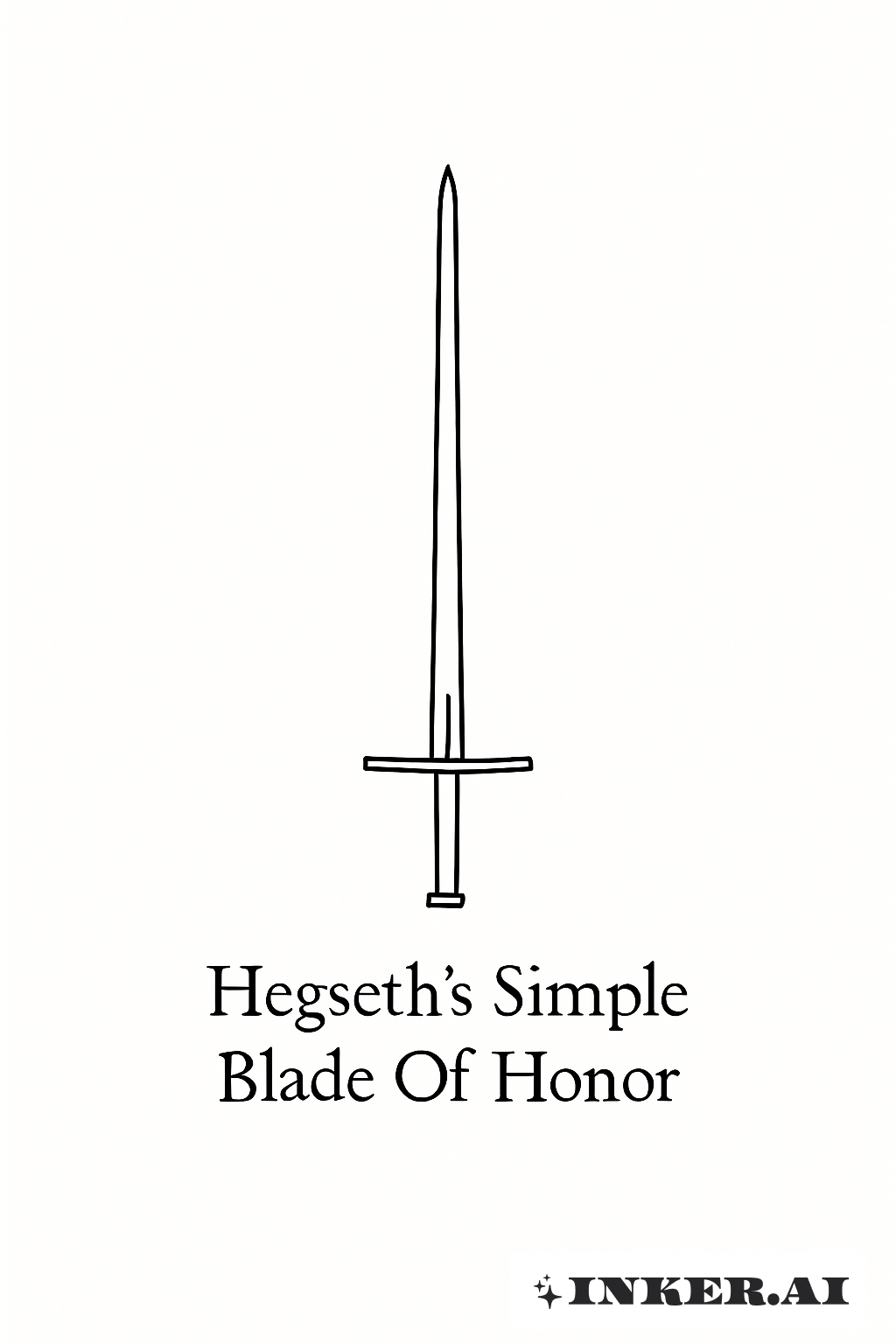
At its core, the image evokes a direct association with honor, duty, and focused intent. The single uninterrupted line suggests singular purpose and moral clarity, while the pared-back hilt implies restraint rather than aggression. In many traditions, a blade symbolizes protection, responsibility, and the readiness to defend loved ones or principles; here those themes are translated through economy of form. The absence of ornamentation points to virtues like humility and self-discipline, inviting the wearer to wear their values visibly but without ostentation. The geometric accents at the base can read as marks of lineage or personal milestones, subtle enough to be private symbols for the wearer. Executed in a Minimalist tattoo style, the design conveys strength through simplicity, turning a classic martial emblem into a modern, contemplative signet. As an example among Hegseth tattoo ideas, it offers a refined alternative to more elaborate heraldic designs, making a bold statement through understatement.
Design Inspiration Of Hegseth's Simple Blade Of Honor Tattoo Design
The concept draws on Scandinavian and military insignia distilled through contemporary minimalism. The artist aimed to strip the sword to its most essential elements: balance, line, and proportion. Inspiration also came from fine-line calligraphy and traditional etchings, where a single steady hand creates weight and meaning. The result is a quiet emblem that reads as both modern graphic art and an heirloom-style token of personal code.