Cultural Meaning Of Hegseth's Geometric Compass Of Morality Tattoo Design
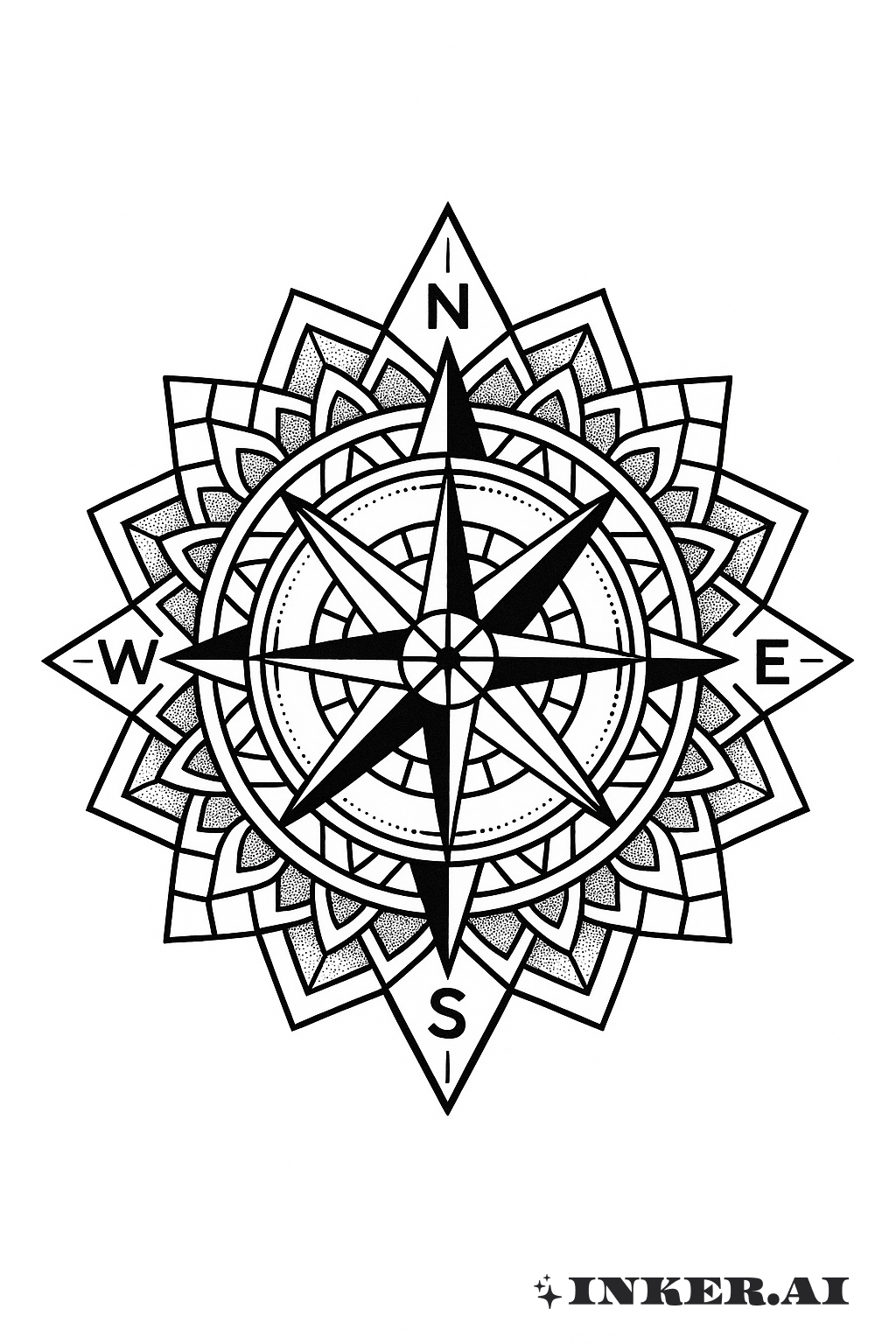
A compass traditionally represents guidance, direction, and the determination to remain on course through uncertainty. In this design, the sharp points can suggest conviction, courage, and readiness to act, while the symmetrical construction reflects balance and personal accountability. The layered center may be read as an inner moral framework: a set of principles that organizes decisions when external pressures become confusing. Angular forms often communicate strength, discipline, and order, making the tattoo feel purposeful rather than ornamental. The absence of color places emphasis on structure and contrast, suggesting that moral choices can be understood through clarity, boundaries, and deliberate judgment. As Geometric tattoo style, the composition also conveys rational thought and the search for harmony between competing forces. For those exploring Hegseth tattoo ideas, the image can symbolize a steadfast identity shaped by values, responsibility, and an unwavering sense of direction. Its compass imagery remains personal, allowing the wearer to define what their own moral north represents while carrying a visible reminder to stay aligned with it.
Design Inspiration Of Hegseth's Geometric Compass Of Morality Tattoo Design
The concept draws inspiration from navigation instruments, sacred geometry, military insignia, and the visual language of architectural diagrams. A traditional compass is reduced to its essential points and rebuilt through intersecting planes, creating a contemporary emblem of direction and judgment. The restrained blackwork approach strengthens the design’s authority, while repetition and symmetry transform an ordinary navigational symbol into a personal statement about principles. Its visual inspiration lies in the meeting of practical precision and philosophical meaning.