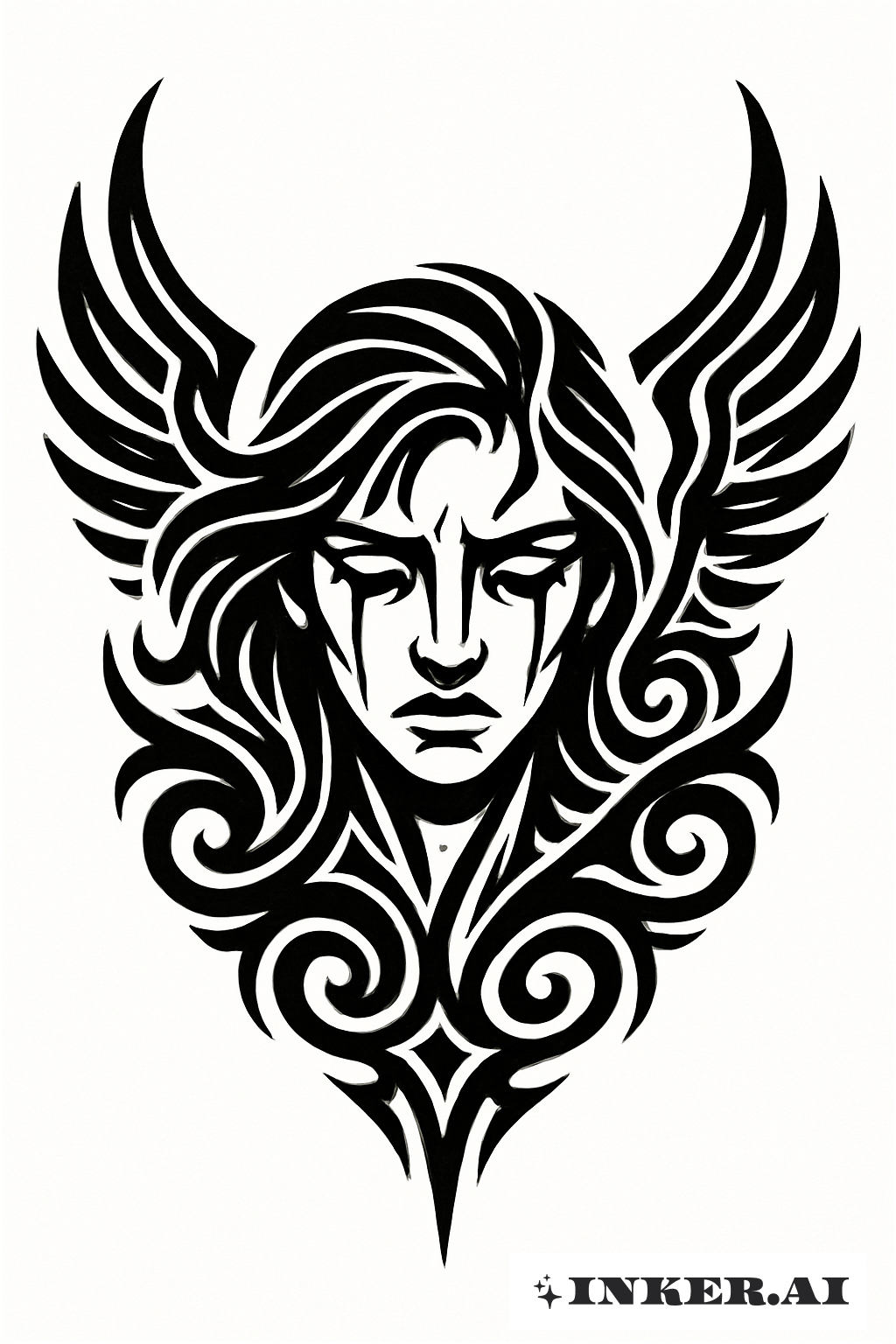
Cultural Meaning Of Fallen Angel's Visage In Tribal Lines Tattoo Design
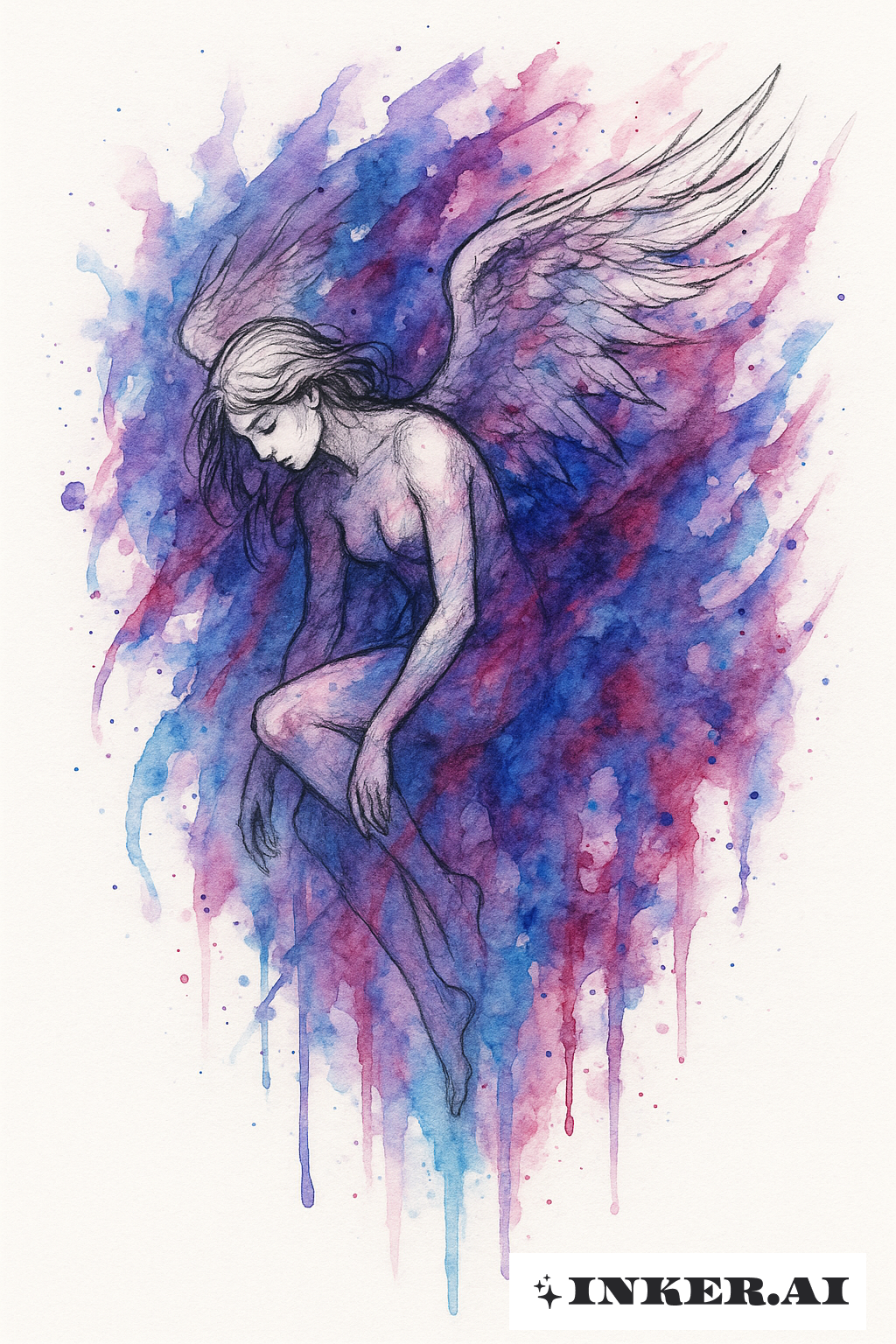
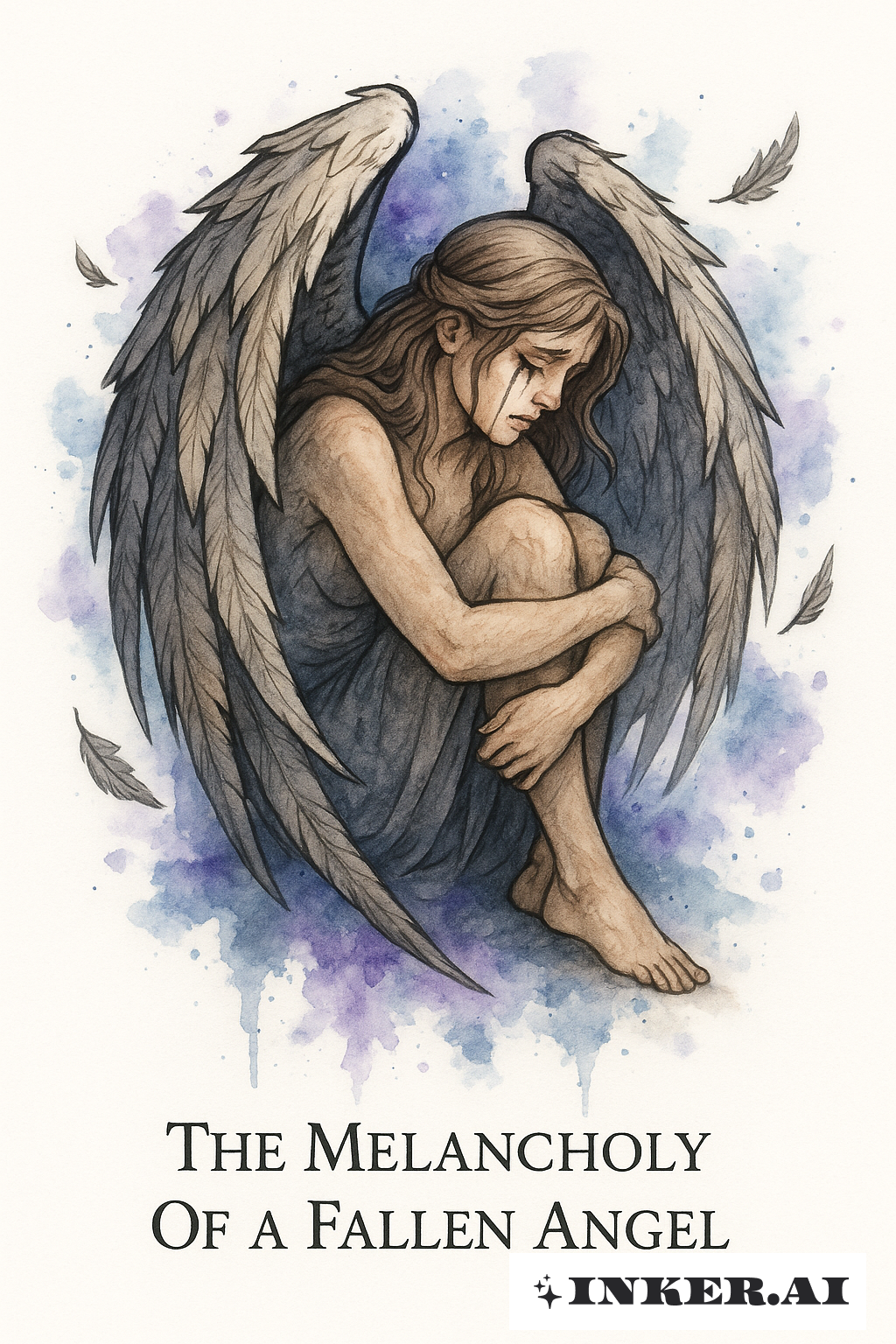
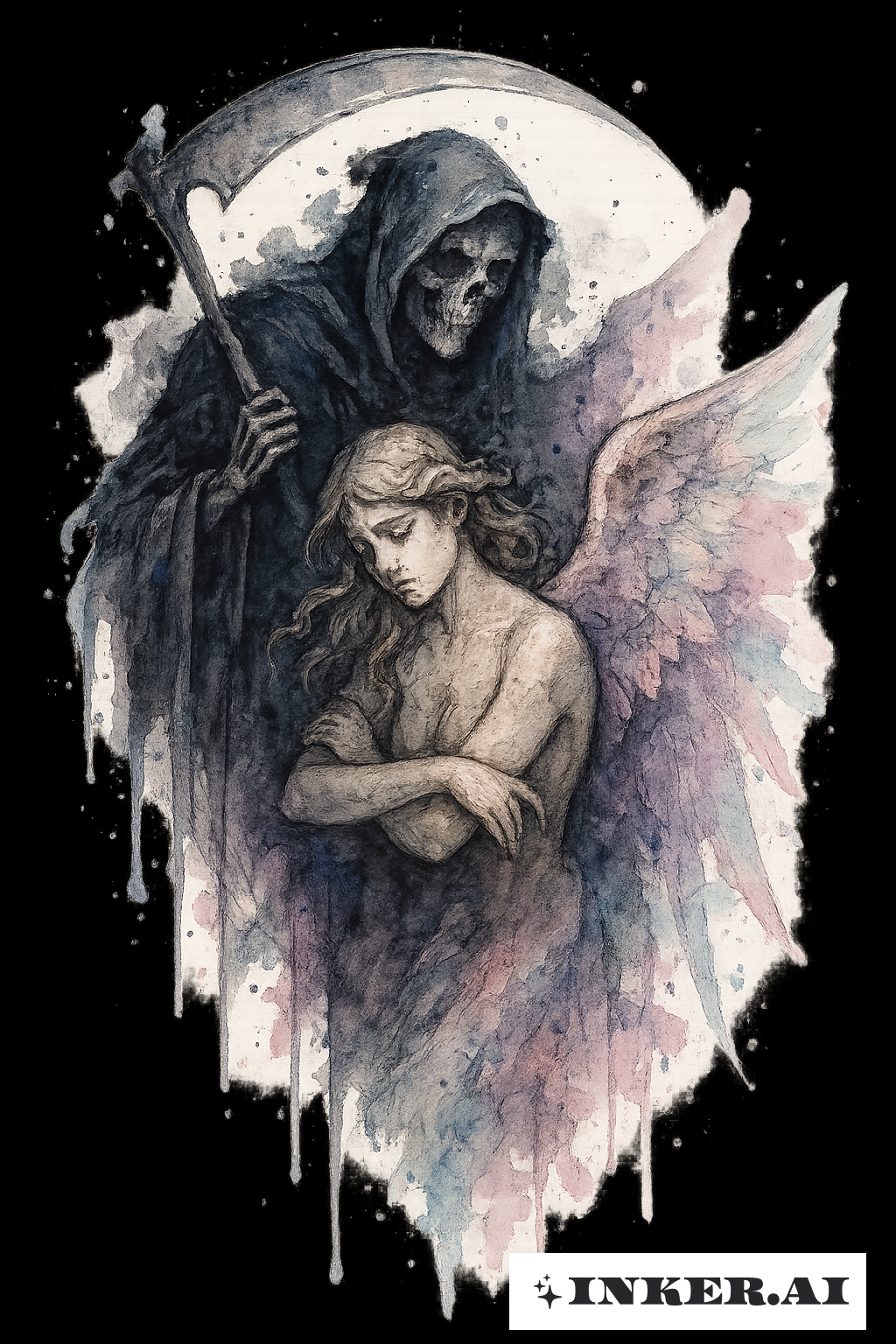
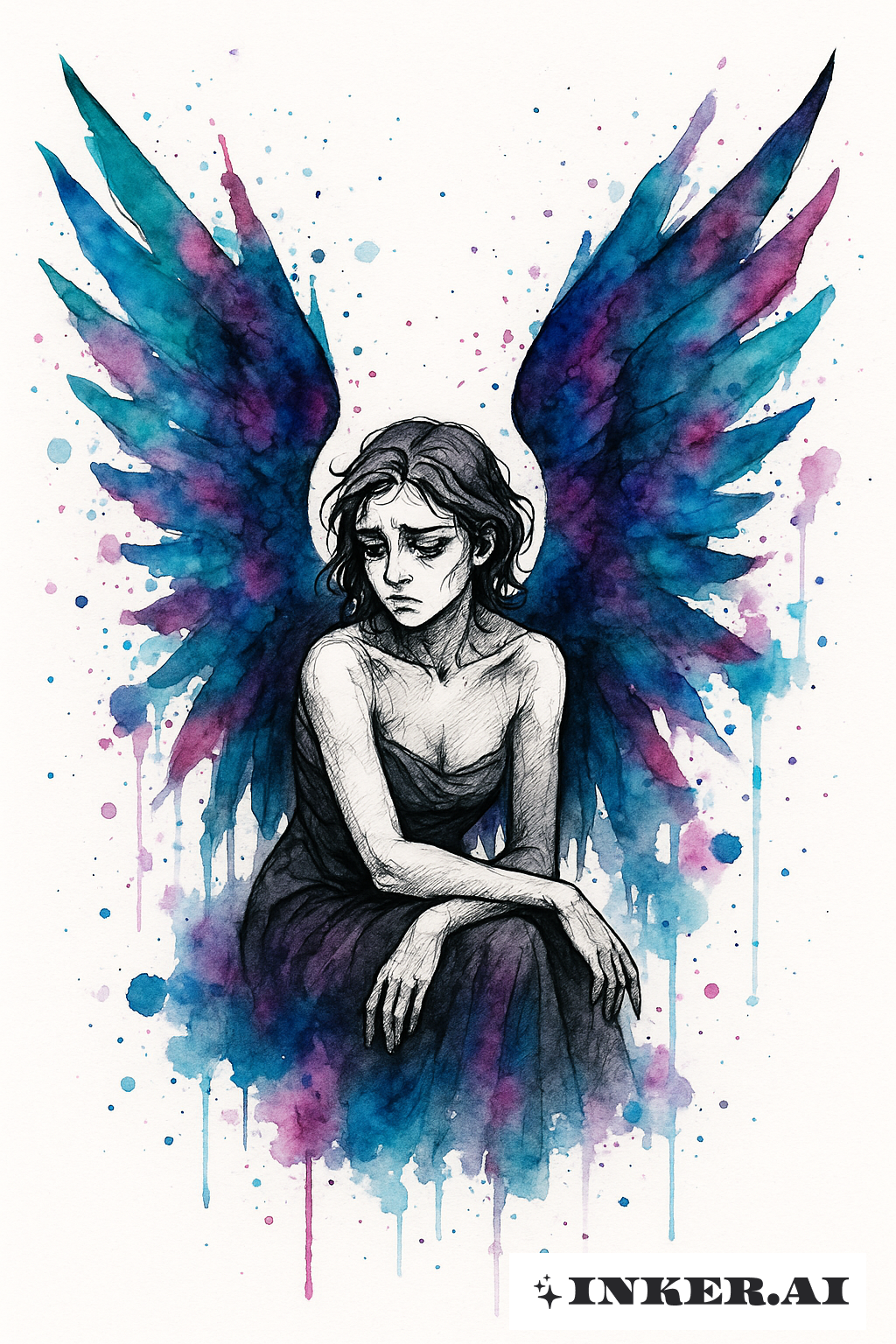
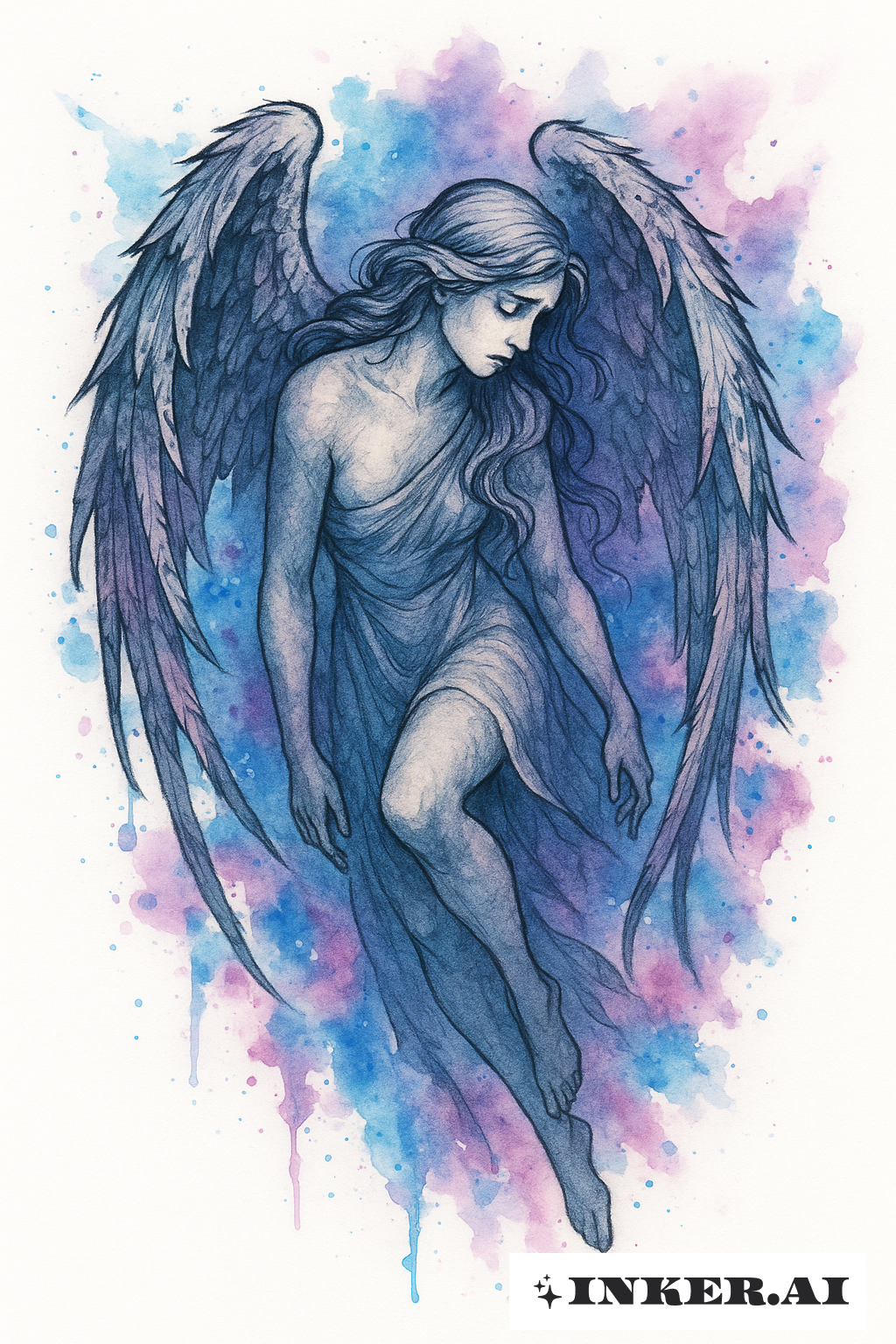
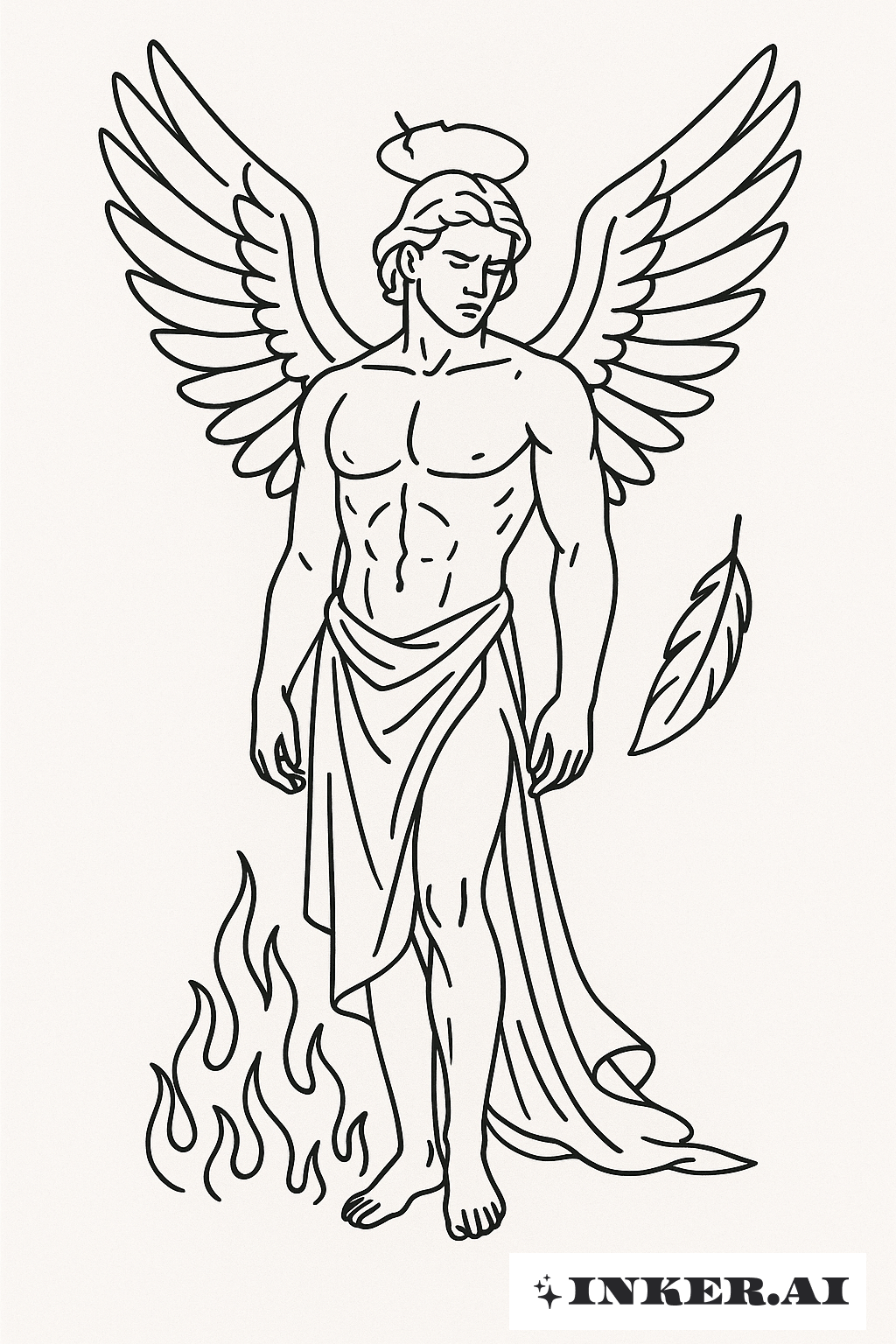
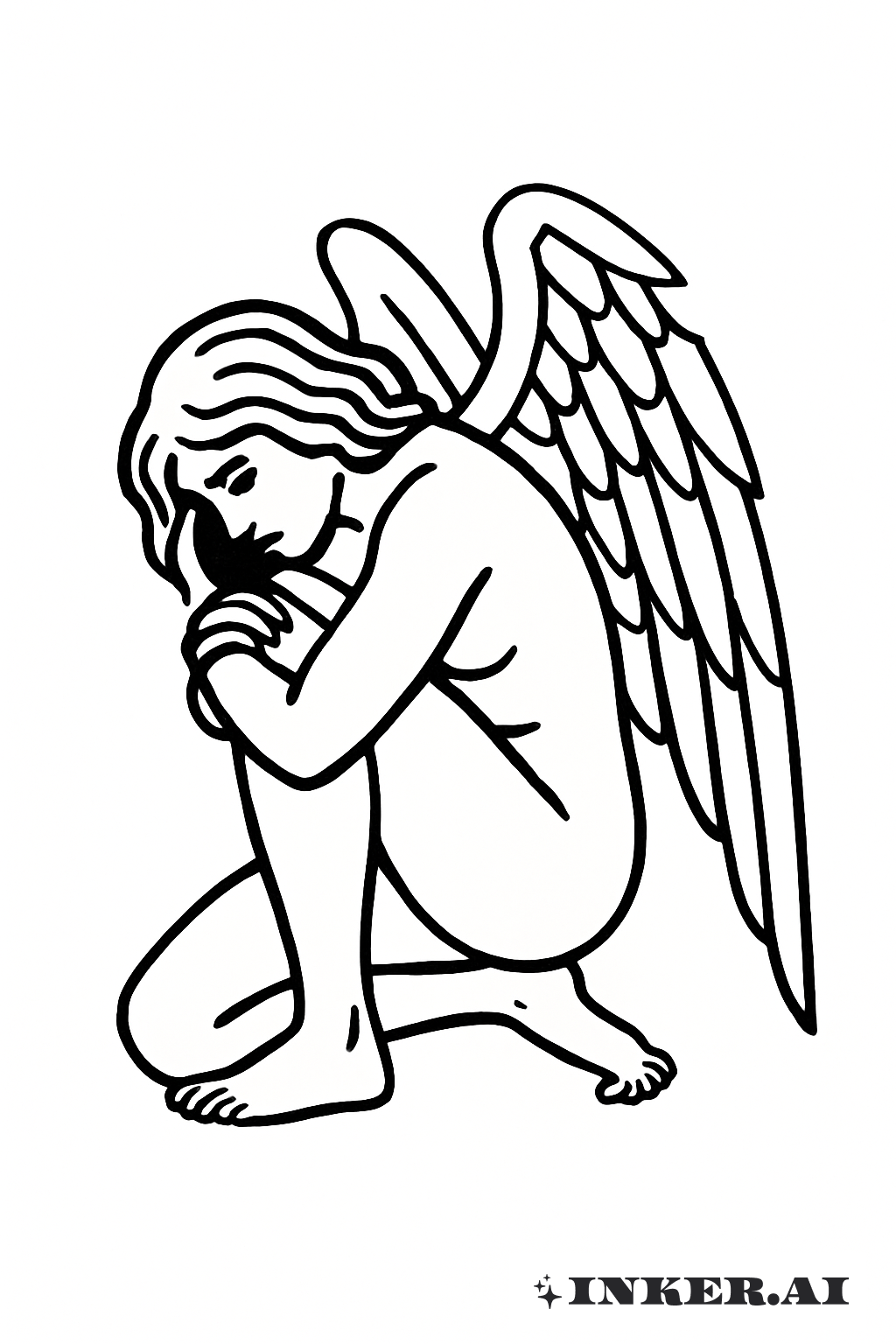
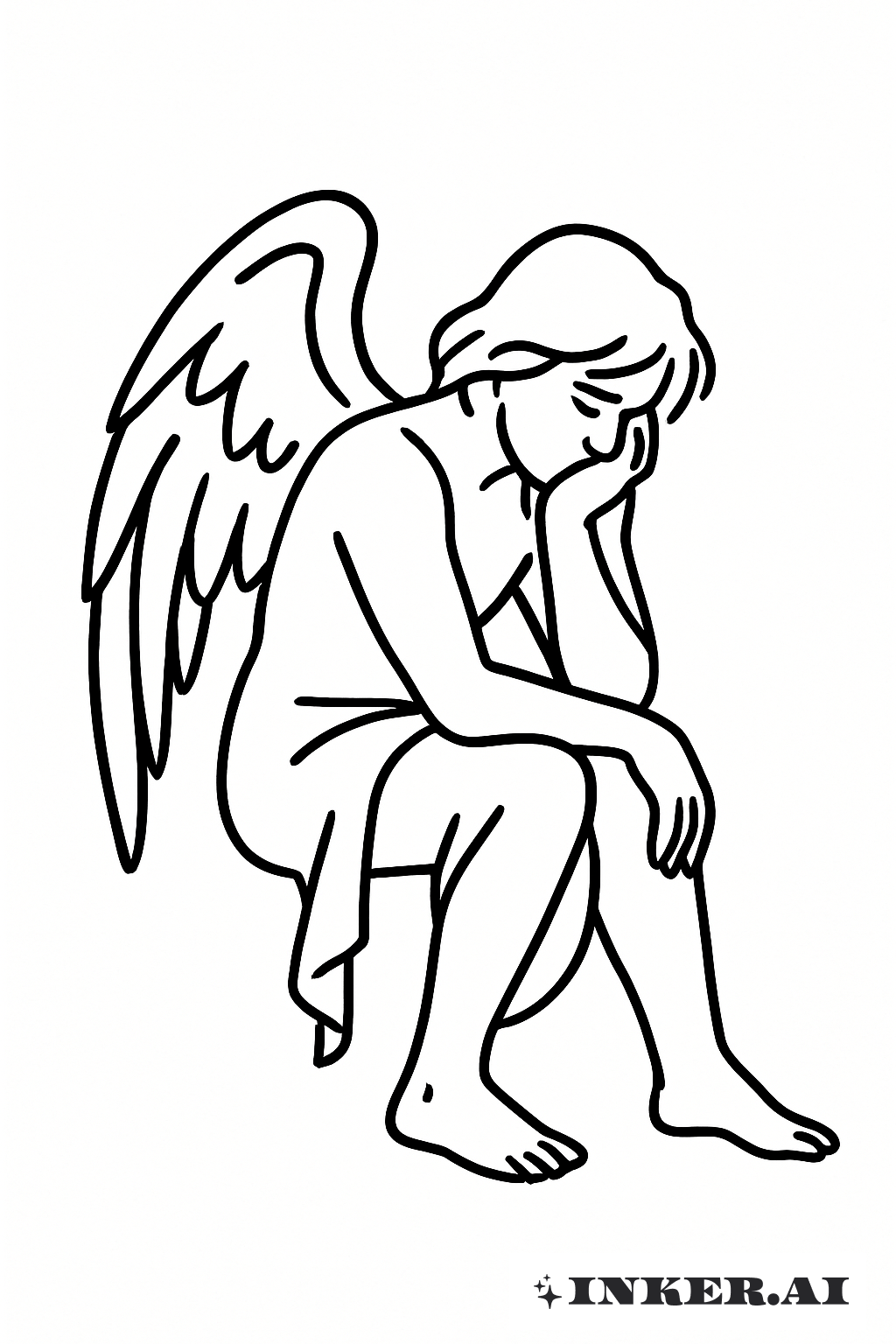
A fallen angel commonly represents the tension between grace and rebellion, innocence and experience, or spiritual beauty and personal struggle. The solemn expression in this design can suggest regret, resilience, defiance, or the acceptance of an imperfect path. Its wing-like projections connect the figure to celestial origins, while the heavy black shading evokes exile, secrecy, and transformation. The face-centered composition makes the tattoo feel deeply personal, as though the wearer is presenting an inner conflict or a hard-earned identity to the world. The sharp points may symbolize pain, protection, and the challenges that shape character, while the flowing curves suggest movement away from the past and toward self-definition. In Tribal tattoo style, the simplified anatomy and commanding silhouette turn complex emotion into a direct visual emblem. These Fallen Angel tattoo ideas can therefore carry a message of surviving darkness without losing individuality, honoring both vulnerability and strength. The design may also appeal to those who view angels outside conventional ideals, embracing contradiction as an essential part of being human.
Design Inspiration Of Fallen Angel's Visage In Tribal Lines Tattoo Design
The concept draws from the visual drama of celestial beings cast into darkness, combining a solemn human visage with the rhythm of carved tribal markings. Bold silhouettes, wing-inspired sweeps, and pointed contours create the impression of motion frozen in a powerful emblem. The inspiration lies in balancing beauty and menace: a face that feels ancient, guarded, and emotionally charged. Its monochrome structure keeps the focus on shape, shadow, and expressive line rather than decorative color.