Cultural Meaning Of Plague Doctor in Foggy Alley Tattoo Design
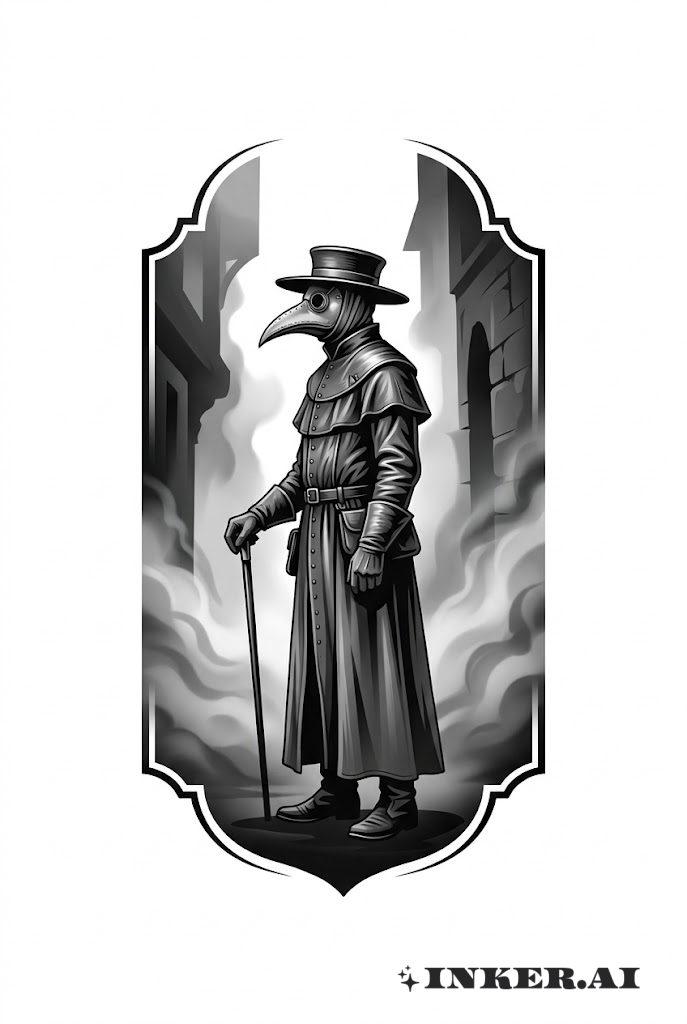
The plague doctor is commonly associated with mortality, disease, protection, and the fragile boundary between life and death. Its beaked mask recalls the physicians of early modern Europe, giving the image a historical connection to epidemics, fear, and humanity’s attempts to confront the unknown. Set within a foggy alley, the figure becomes a symbol of uncertainty and emotional endurance. The obscured surroundings may represent hidden dangers, difficult memories, or a journey through circumstances that cannot yet be fully understood. At the same time, the doctor can suggest resilience, guardianship, and the courage to move toward suffering rather than turn away from it. A Realism tattoo style treatment strengthens these meanings by making the character appear tangible and present, almost like a witness emerging from the past. For people drawn to Plague Doctor tattoo ideas, the design may express an acceptance of impermanence, an interest in dark history, or a personal transformation shaped by hardship. The fog leaves room for interpretation, allowing the tattoo to represent both menace and protection.
Design Inspiration Of Plague Doctor in Foggy Alley Tattoo Design
The concept draws from the haunting atmosphere of abandoned European streets, historical medical imagery, and cinematic scenes where a lone figure emerges through mist. The contrast between the doctor’s rigid silhouette and the soft, shifting fog creates visual tension. Architectural darkness frames the character like a stage, while muted highlights suggest distant hope beneath the ominous mood. The design is inspired by gothic storytelling, old-world mystery, and the emotional power of leaving parts of a scene hidden.