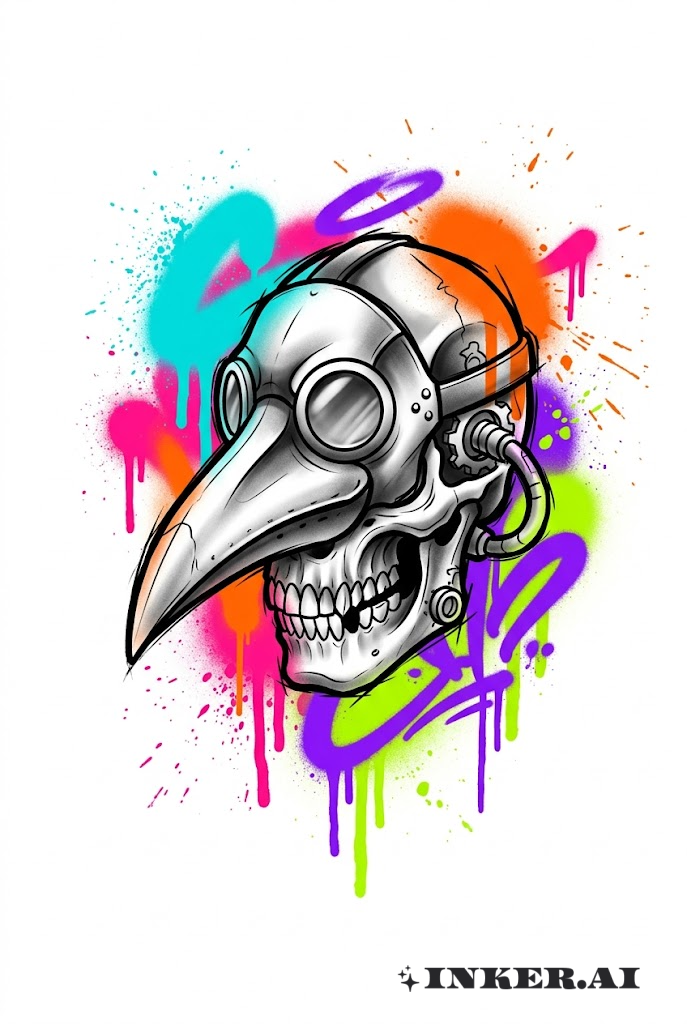
Cultural Meaning Of Plague Doctor Graffiti Skull Tattoo Design
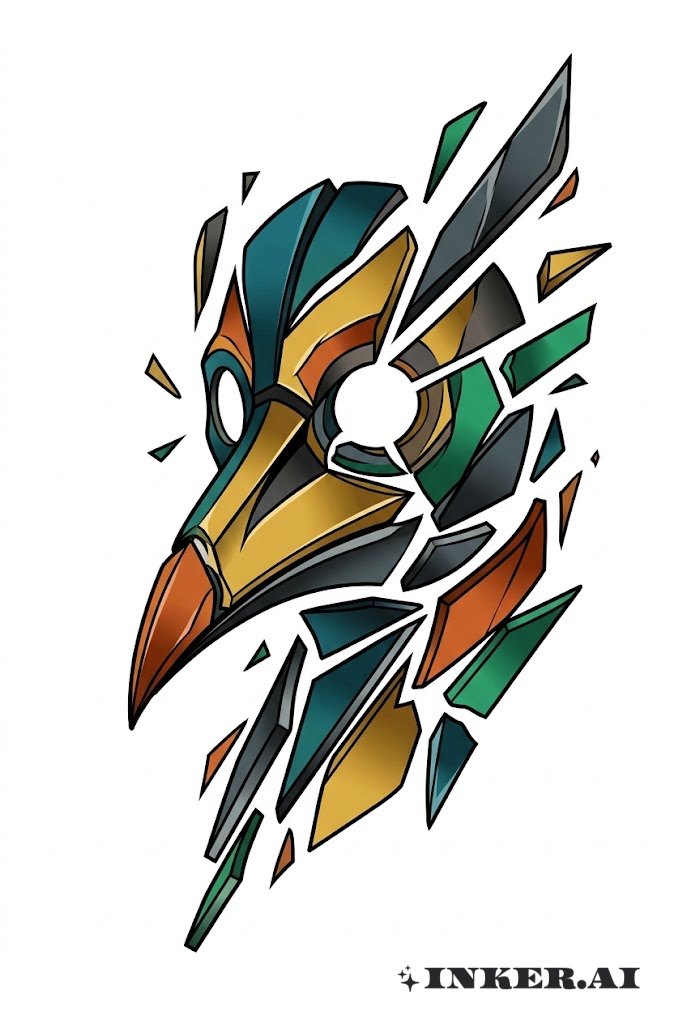
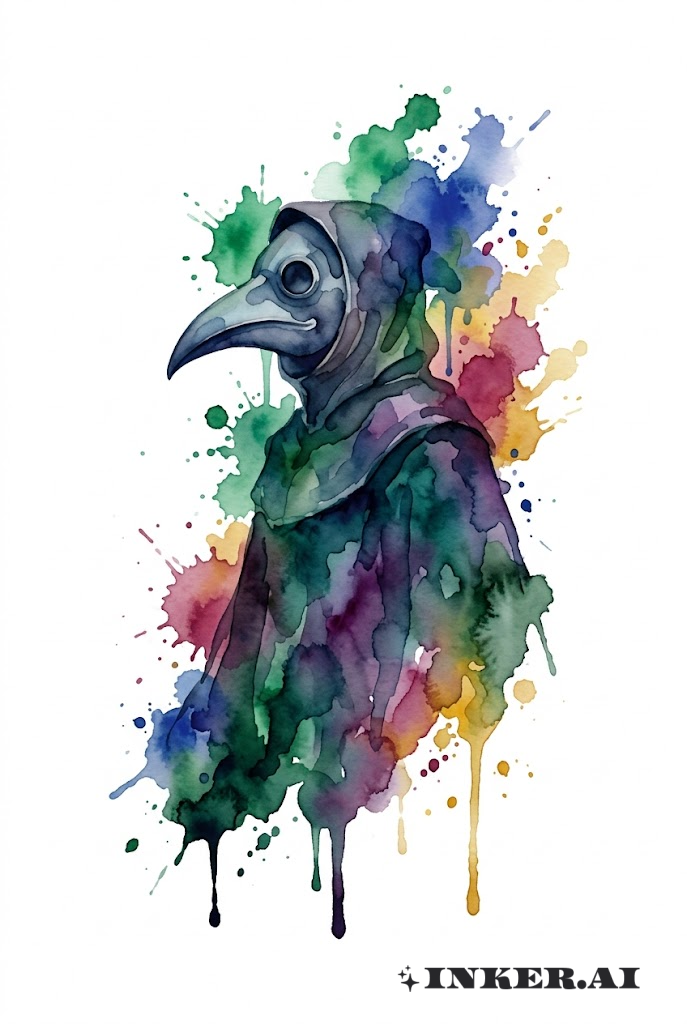
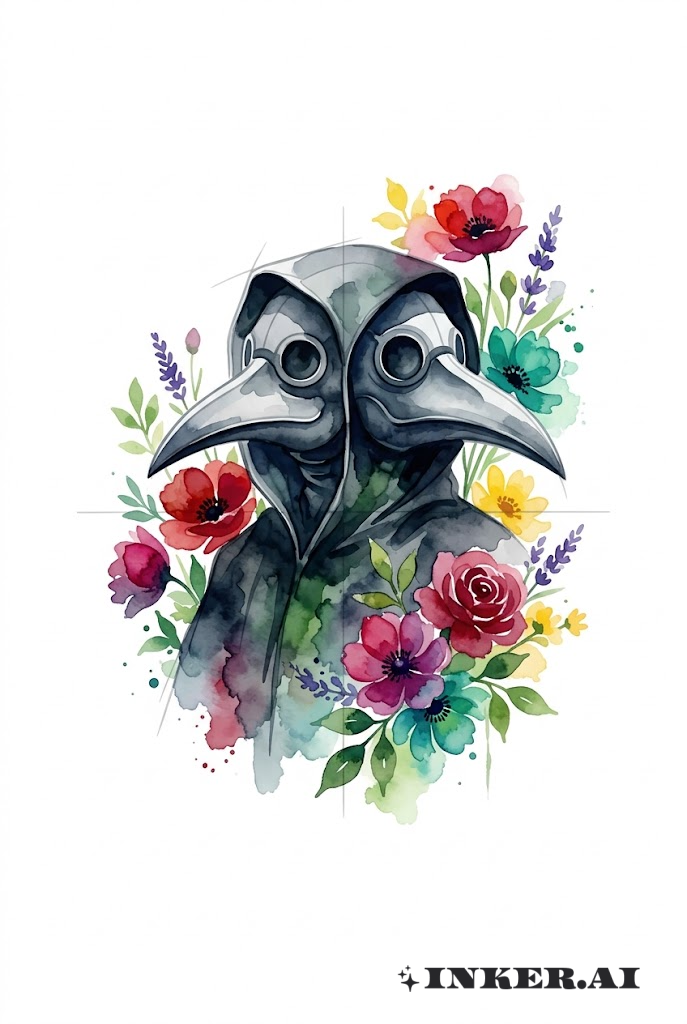
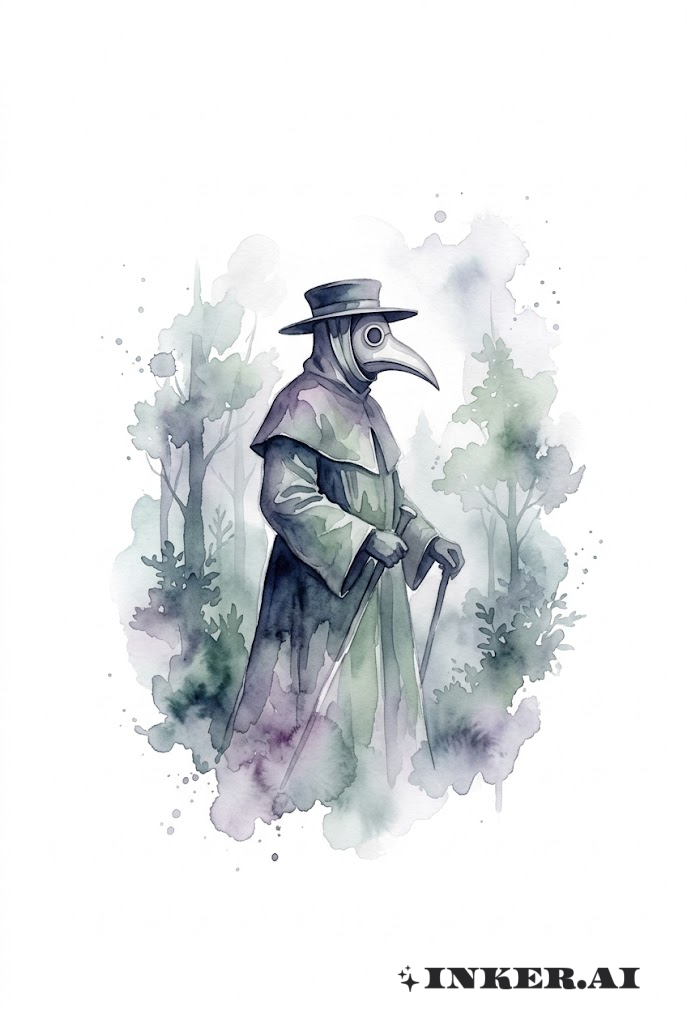
At its core, this image fuses historical menace with modern rebellion: a skull fused to a beaked medical mask evokes mortality, secrecy, and the eerie care of plague-era healers, while urban spray techniques imply transience and counterculture. The skull alone signals impermanence and a confrontation with death; the beak adds a layer of historical narrative, suggesting both protection and superstition. Bright, clashing colors and paint drips translate that weighty symbolism into a contemporary, in-your-face statement—almost a visual manifesto that mortality can be bold and defiant. In street art contexts, the beaked figure reads as a critique of institutions and fear, reclaiming a frightening archetype with humor and grit. The layered tags and worn textures also speak to memory and decay: walls age, paint peels, but messages endure. By combining Graffiti tattoo style with the lore of the Plague Doctor tattoo ideas, the design becomes both a personal memento and a social commentary—perfect for wearers who want an image that honors history while shouting confidence on the sidewalk.
Design Inspiration Of Plague Doctor Graffiti Skull Tattoo Design
This tattoo draws from 17th-century plague iconography and contemporary street art. Inspiration came from stencil masters and spray-can guerrilla pieces—how bold silhouettes read from a distance, how drips and overspray suggest motion and urgency. The skull/beak pairing riffs on medical history and masked anonymity, reimagined with punk color and comic-book edge. The goal was to create something gritty and theatrical: a wearable mural that feels improvised, confrontational, and strangely ceremonial all at once.