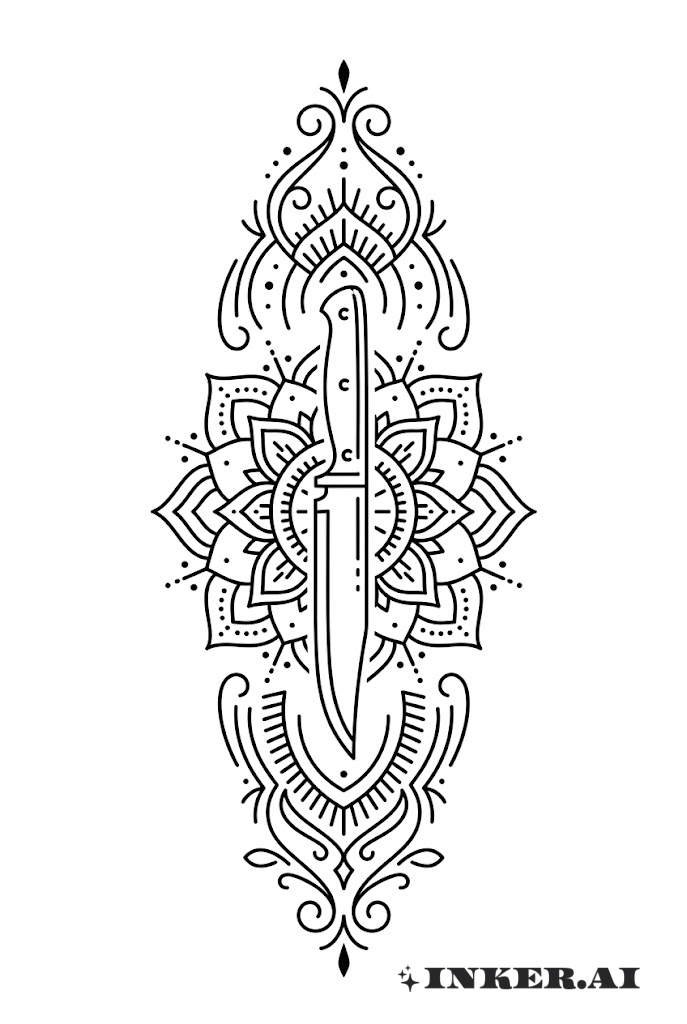
Cultural Meaning Of Symmetrical Ornamental Knife Mandala Tattoo Design
At its core the mandala structure signals harmony, center and cyclical renewal, while the embedded blades add layers of meaning about protection, clarity and transformation. The juxtaposition of decorative motifs and sharp implements suggests a balance between beauty and utility: ornamentation that protects, and an edge that cultivates focus. In many cultures, radial patterns invite meditation and inward travel; here, each blade pointing outward can represent boundary-setting or the release of obstacles. Handles and filigree woven into the design hint at craftsmanship and lineage, evoking heirlooms and tools passed down through generations. As a wearable emblem it can signify personal resilience, deliberate precision, or a commitment to cut away what no longer serves. Presented as a study in contrast, this design highlights how embellished forms can elevate utilitarian objects into symbols of identity, expressed through Ornamental tattoo style and reframed by Knife tattoo ideas as both literal and metaphorical instruments of change.
Design Inspiration Of Symmetrical Ornamental Knife Mandala Tattoo Design
This design grew from a desire to fuse utilitarian imagery with ornamental tradition. The mandala’s geometry provided a calm scaffold for repeating blade motifs, turning utility into ritual. Inspirations include classic metalwork patterns, Eastern mandala geometry, and hand-forged knife silhouettes—combined to make an image that reads as both protective talisman and decorative statement. The aim was to honor sharp precision while celebrating delicate detail, creating a tattoo that feels ceremonial and modern at once.