Cultural Meaning Of Infected Oni Mask With Fungal Growth Tattoo Design
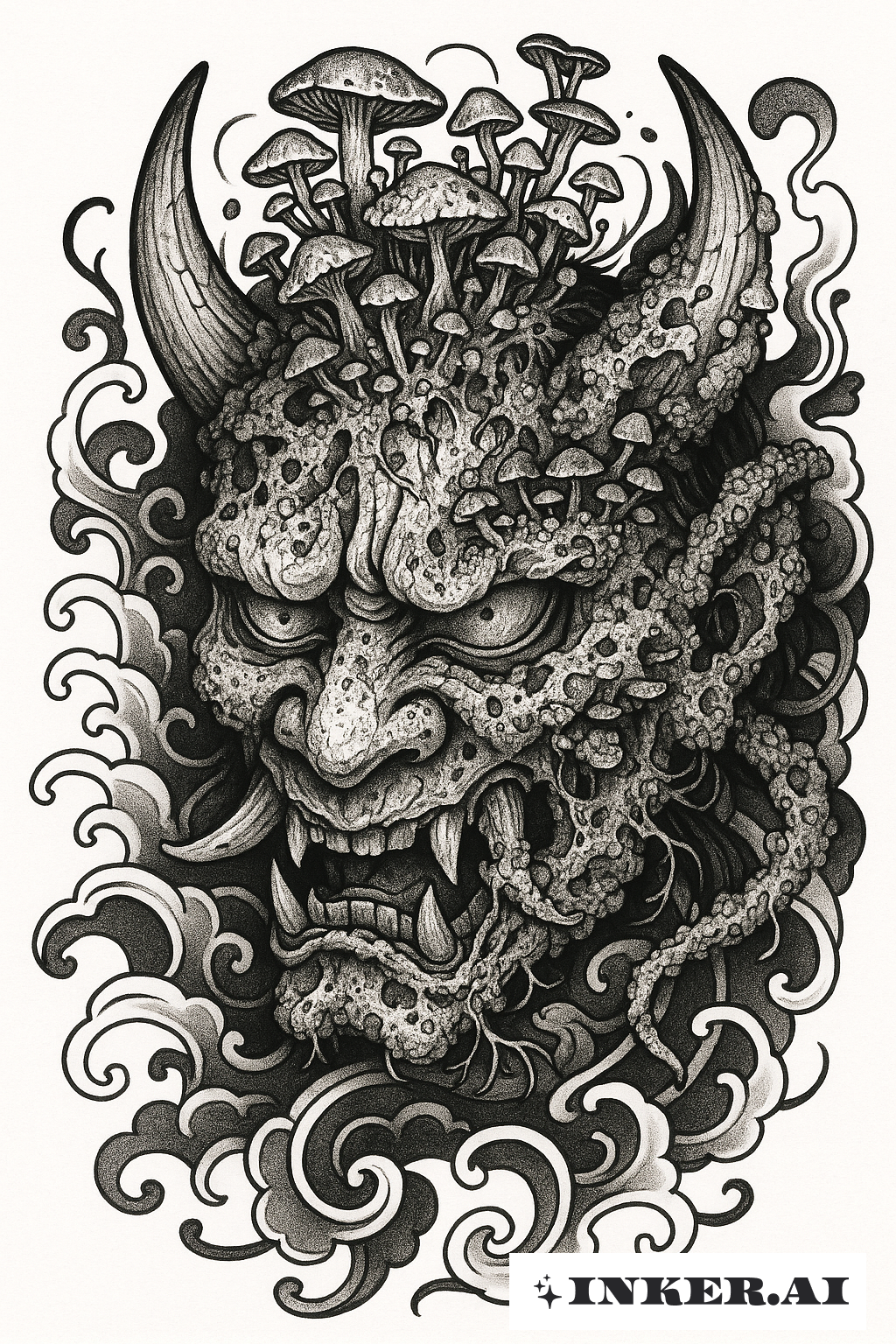
The oni mask traditionally embodies anger, protection, and the supernatural; when overrun by decay and fungus it becomes a meditation on mortality, corruption, and nature’s reclaiming force. The fungal growth, with its creeping mycelium and fruiting bodies, symbolizes slow transformation and the breakdown of outward facades, suggesting that even fearsome spirits can be humbled by time and biological processes. This duality—power versus vulnerability—speaks to personal battles, inner rot, or the acceptance of impermanence. Using traditional motifs twisted by biological horror creates a dialogue between cultural heritage and contemporary anxieties, where the mask’s carved features remain a reminder of identity even as they are softened by encroachment. As a visual statement it merges protective symbolism with unsettling metamorphosis, a look that fits within Japanese tattoo style while expanding into modern commentary, making it a compelling choice among Infected tattoo ideas for those who favor mythic darkness and existential themes.
Design Inspiration Of Infected Oni Mask With Fungal Growth Tattoo Design
The concept grew from pairing yokai iconography with natural decomposition—imagining a ceremonial mask left in a forest and slowly colonized by fungi. Inspirations include classic woodblock masks, scientific illustrations of mycology, and contemporary horror art: bold silhouette, textured surfaces, and organic growth patterns. The design aims to retain cultural weight while exploring tactile contrasts—glossy lacquer versus fuzzy caps—and to translate small biological details into tattoo-friendly marks that age well on skin.