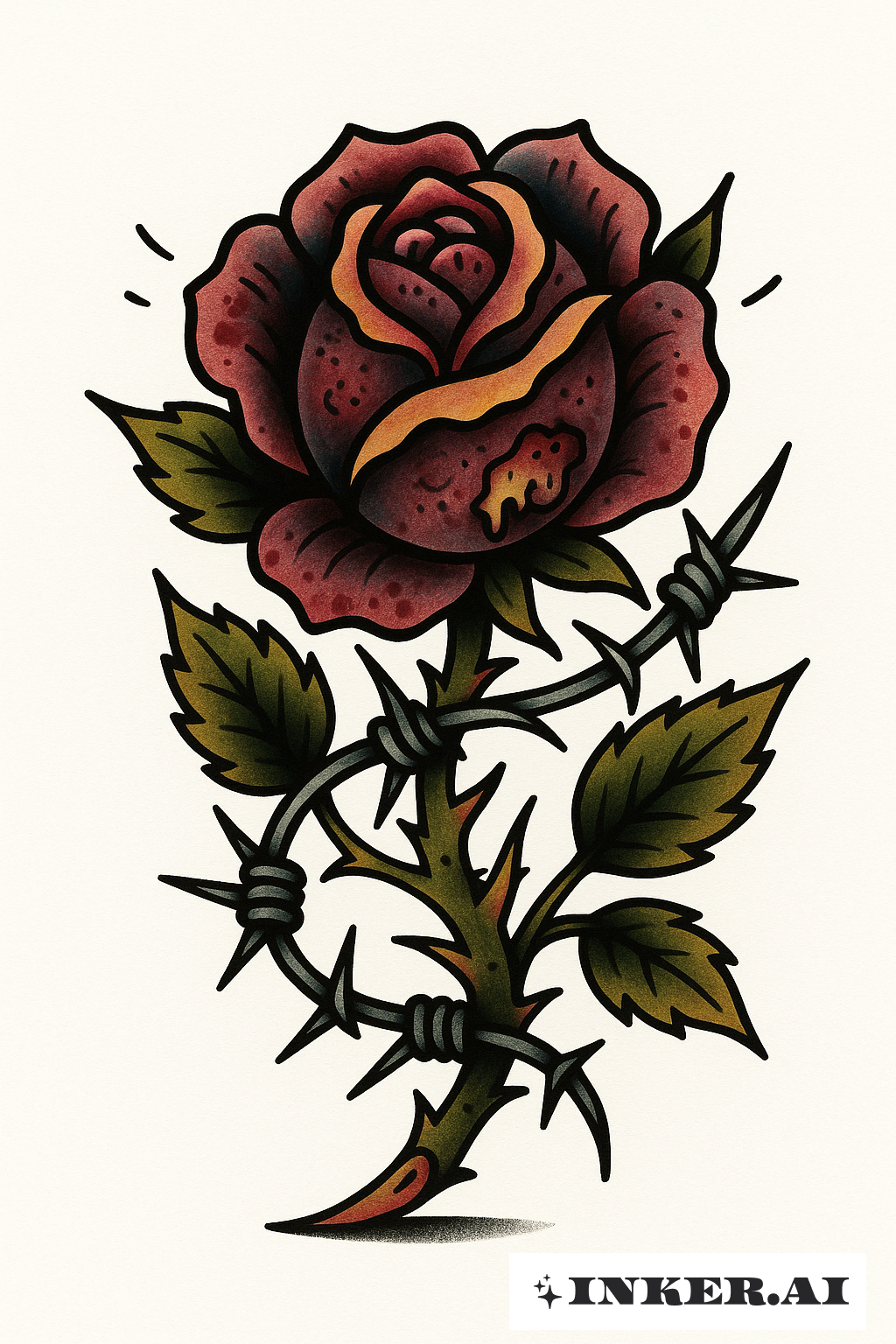
Cultural Meaning Of A Traditional Infected Rose And Barbed Wire Tattoo Design
The design juxtaposes classic symbolism of the rose—love, beauty, remembrance—with motifs of corruption, pain, and containment. The rose still reads as passion and devotion, but its infected surface suggests decay, betrayal, or an emotional wound that refuses to heal. Barbed wire wrapping the bloom intensifies ideas of protection, imprisonment, or the scars that come from close attachment; its punctures imply that defense and love often cause harm. The contrast between bold, timeless iconography and disturbing details asks viewers to consider dualities: attraction versus danger, strength versus vulnerability, and preservation versus rot. Anchoring the imagery in American Traditional tattoo style gives the piece a sense of permanence and historic weight, while the deliberate use of infection imagery recontextualizes familiar meanings. For someone choosing this design, the symbol can represent resilience in the face of corruption, a hard-earned devotion marked by trauma, or a memento mori framed through beauty and decay. Infected tattoo ideas here act as narrative tools, transforming a common emblem into a layered story about endurance and loss.
Design Inspiration Of A Traditional Infected Rose And Barbed Wire Tattoo Design
The concept grew from a desire to pair vintage tattoo flash with medical and horror aesthetics. Inspirations included sailor-era roses, rusted metal textures, old botanical plates, and anatomical illustrations—melding clean, readable forms with visceral surface detail. The goal was to keep the silhouette and boldness of traditional flash while introducing distress through color bruising, wet highlights, and torn edges. Barbed wire was chosen to add motion and a literal sense of restraint, puncturing romance with danger. The limited palette preserves clarity at small sizes, while the infected elements create unsettling focal points, resulting in a tattoo that feels both classic and provocatively modern.