Cultural Meaning Of Haunted Victorian Ghost Tattoo Design
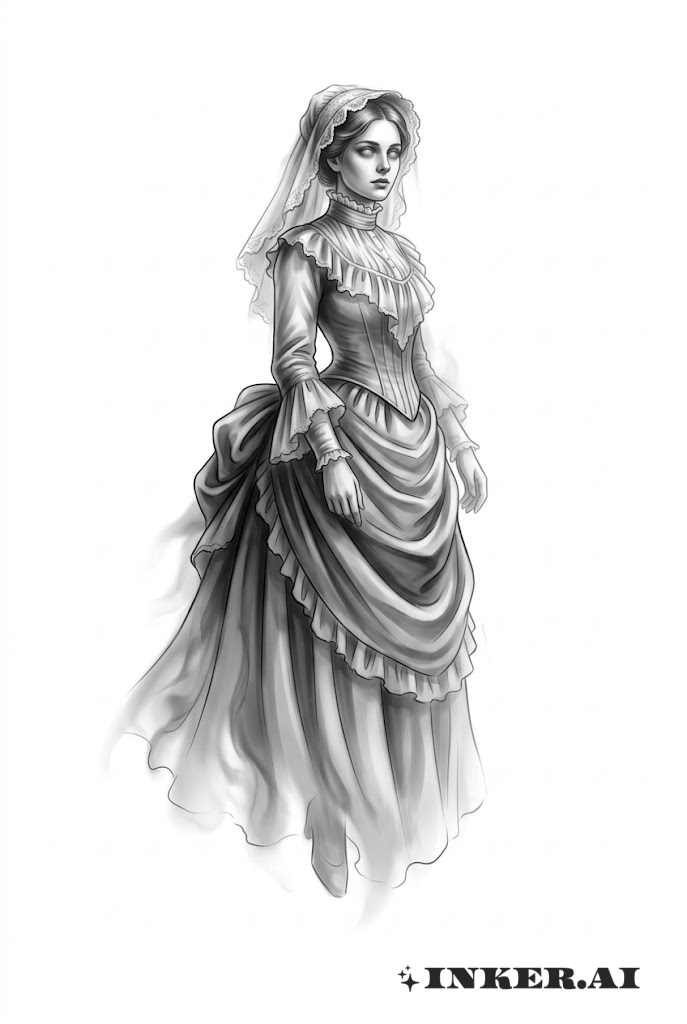
At its core, the image channels loss, memory, and the persistence of the past. The Victorian woman embodies lingering grief and stories left untold—an ancestor, a forgotten lover, or a social ghost of bygone rules and expectations. The boarded windows and overgrown façade act as visual metaphors for buried histories and rooms of the psyche sealed off by time. The careful rendering of fabric and facial features invites empathy; the viewer reads humanity in the apparition rather than dismissing it as mere fright. Using contrast between fragile flesh tones and the rigid architecture suggests the tension between vulnerability and the weight of tradition. The decision to present this concept in Realism tattoo style grounds the supernatural in tactile truth, making the theme feel immediate and intimate. For someone choosing a piece about remembrance or unresolved chapters, these Ghost tattoo ideas offer both narrative depth and visual subtlety.
Design Inspiration Of Haunted Victorian Ghost Tattoo Design
The creative impulse comes from Victorian portrait photography, Gothic literature, and the soft chiaroscuro of old oil paintings. I imagined fog-drenched estate grounds and faded daguerreotypes, then merged that reference with cinematic lighting to give the ghost a tangible presence. Textural contrasts—lace against weathered wood, smooth skin against rough stone—were emphasized to heighten the tactile realism. The goal was to create a tattoo that reads like a worn heirloom photograph come alive: intimate, haunting, and rich with narrative suggestions rather than explicit storylines.