Cultural Meaning Of A Gen Z Glitching Rose In Fading Watercolor Tattoo Design
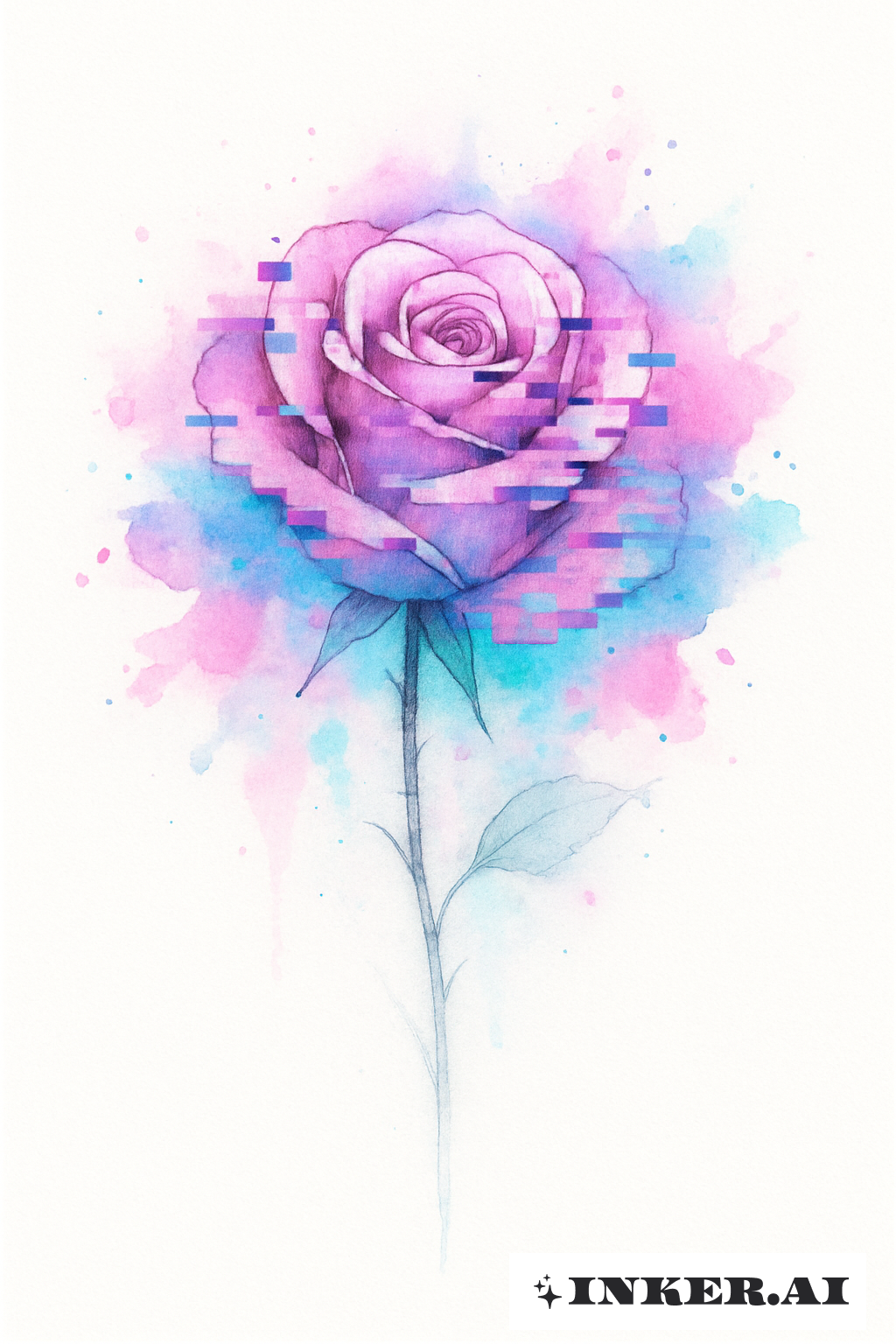
The rose traditionally represents love, beauty, passion, and emotional vulnerability, while its fading form introduces ideas of impermanence and transformation. The digital distortion can symbolize the pressure of living between physical and online identities, where memories, relationships, and self-image are constantly edited, filtered, and reshaped. Pixel fragments may suggest a fractured experience, but they can also represent adaptation: the ability to rebuild something meaningful from disruption. The unfinished watercolor edges reinforce the idea that personal growth is never completely fixed or defined. Rather than presenting perfection, the flower embraces change, softness, and visible flaws. This Watercolor tattoo style gives the symbolism an emotional, dreamlike quality, allowing the colors to appear as though they are dissolving into memory. Within Gen Z tattoo ideas, the rose can express romantic feeling, digital-age fatigue, individuality, or the decision to remain sensitive in a rapidly changing world. Its contrast between a timeless botanical symbol and modern glitch language makes the tattoo feel both personal and culturally relevant.
Design Inspiration Of A Gen Z Glitching Rose In Fading Watercolor Tattoo Design
The concept draws inspiration from the contrast between traditional botanical illustration and the unstable visuals of corrupted digital media. A classic rose becomes more contemporary when its petals dissolve into loose pigment, fragmented pixels, and broken outlines. The fading color suggests a fleeting memory, while the glitch effect introduces tension between natural growth and artificial technology. Together, these elements create a poetic image about beauty that remains powerful even as it changes.