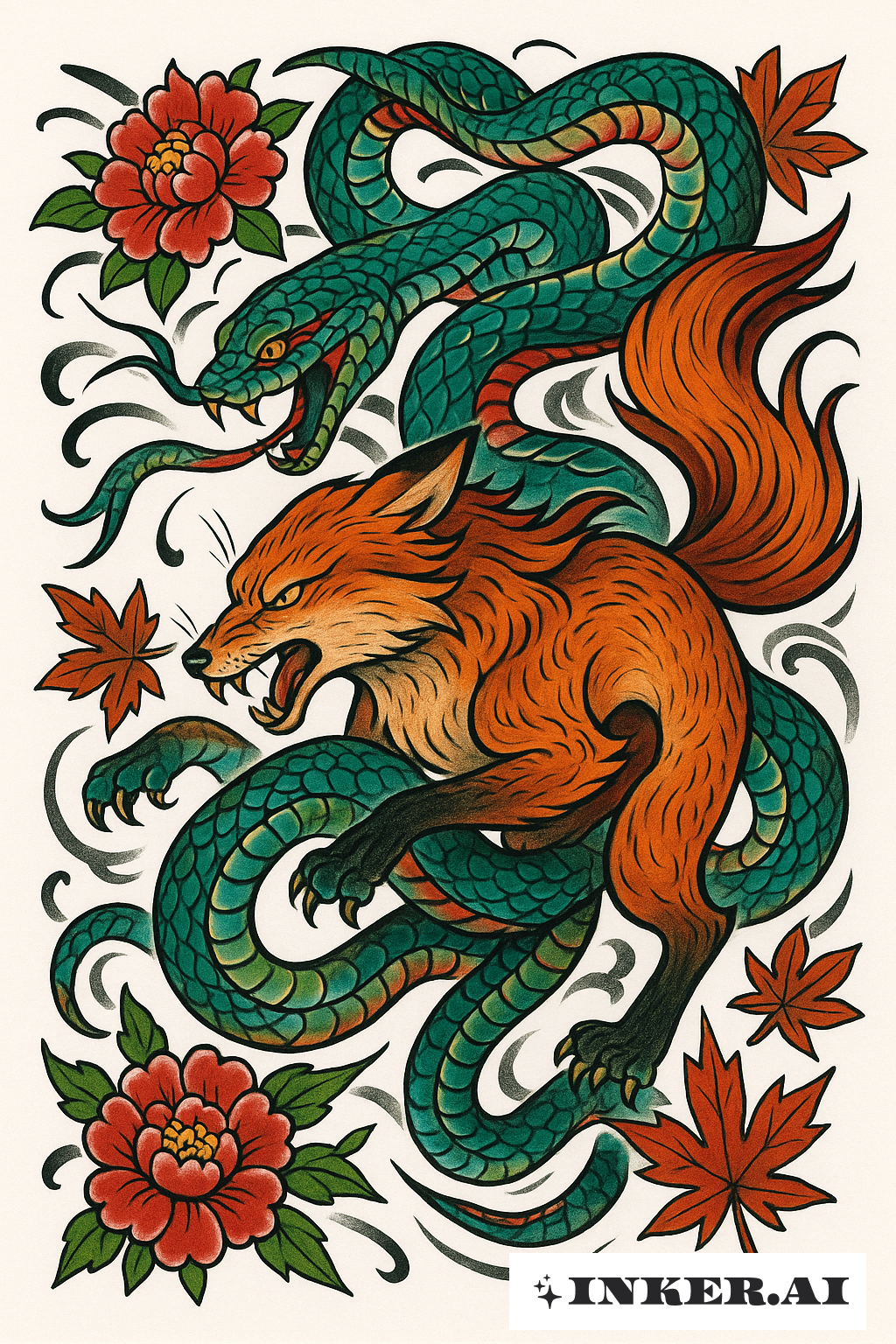
Cultural Meaning Of A Traditional Japanese Fox Fighting a Serpent Tattoo Design
This motif pairs two potent archetypes: the cunning fox and the primordial serpent. In folklore, the fox often stands for intelligence, transformation, and trickery, while the serpent embodies renewal, danger, and hidden wisdom. When depicted in conflict, the imagery suggests an inner struggle between cleverness and instinct, deception and rebirth. The mythic energy is amplified by traditional motifs such as waves and wind, which signal motion, impermanence, and the forces that shape destiny. Placing this scene in a classical register connects it to long-standing narrative tattoo practices, emphasizing personal evolution and resilience. As a piece rooted in cultural storytelling, it can be read as a rite of passage or a reminder to balance cunning with caution. The visual language is intentionally bold and declarative, aligning with expectations for enduring body art that tells a personal saga. Collectors seeking narrative-driven designs will find this a rich source of inspiration among Fox tattoo ideas, and it adapts naturally to established conventions of Japanese tattoo style for those who wish to honor that heritage.
Design Inspiration Of A Traditional Japanese Fox Fighting a Serpent Tattoo Design
The tattoo draws on classical myth and ukiyo-e dynamics: a dramatic encounter frozen mid-conflict, where every curl and scale contributes to storytelling. The fox’s lithe posture and the serpent’s coiling form reference theatrical movement in woodblock prints, while modern tattoo techniques refine texture and depth. Inspiration also comes from the desire to capture moral ambiguity—beauty and danger intertwined—so the design feels both ornamental and charged with meaning. The result is a piece that balances narrative richness with visual punch, meant to age gracefully on the body.