Cultural Meaning Of The Hannya Boulder Of Sisyphus Tattoo Design
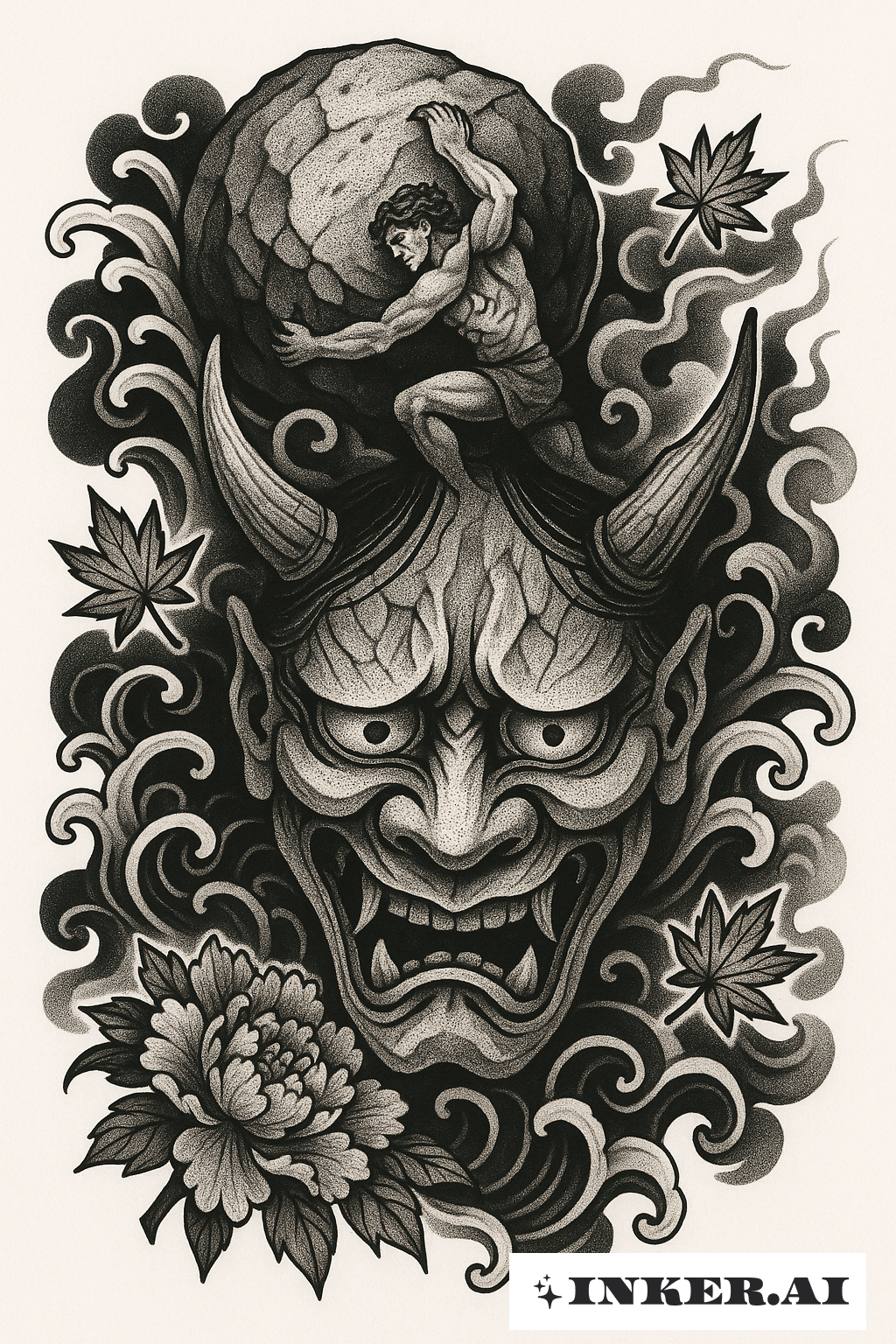
The Hannya mask carries layered meanings in Japanese performance: jealousy, rage, and the sorrow of transformation. Here it is grafted onto a massive stone to literalize an inward torment that becomes outward burden. The relentless uphill push evokes the ancient punishment of endless labor, while the mask’s demonized expression suggests that personal demons are often the heaviest loads to bear. Floral fragments and wind motifs soften the scene, hinting at impermanence and the possibility of release even amid repetition. The contrast between polished, ritualized mask and rough, indifferent rock underscores the tension between cultivated identity and brute circumstance. Rendered with respect for traditional line rhythms and negative-space balance, the work nods to Japanese tattoo style while offering a contemporary reinterpretation of myth. For those exploring narrative body art, these Sisyphus tattoo ideas transform a classical tale into a compact, emotionally charged emblem of resilience and tragic beauty.
Design Inspiration Of The Hannya Boulder Of Sisyphus Tattoo Design
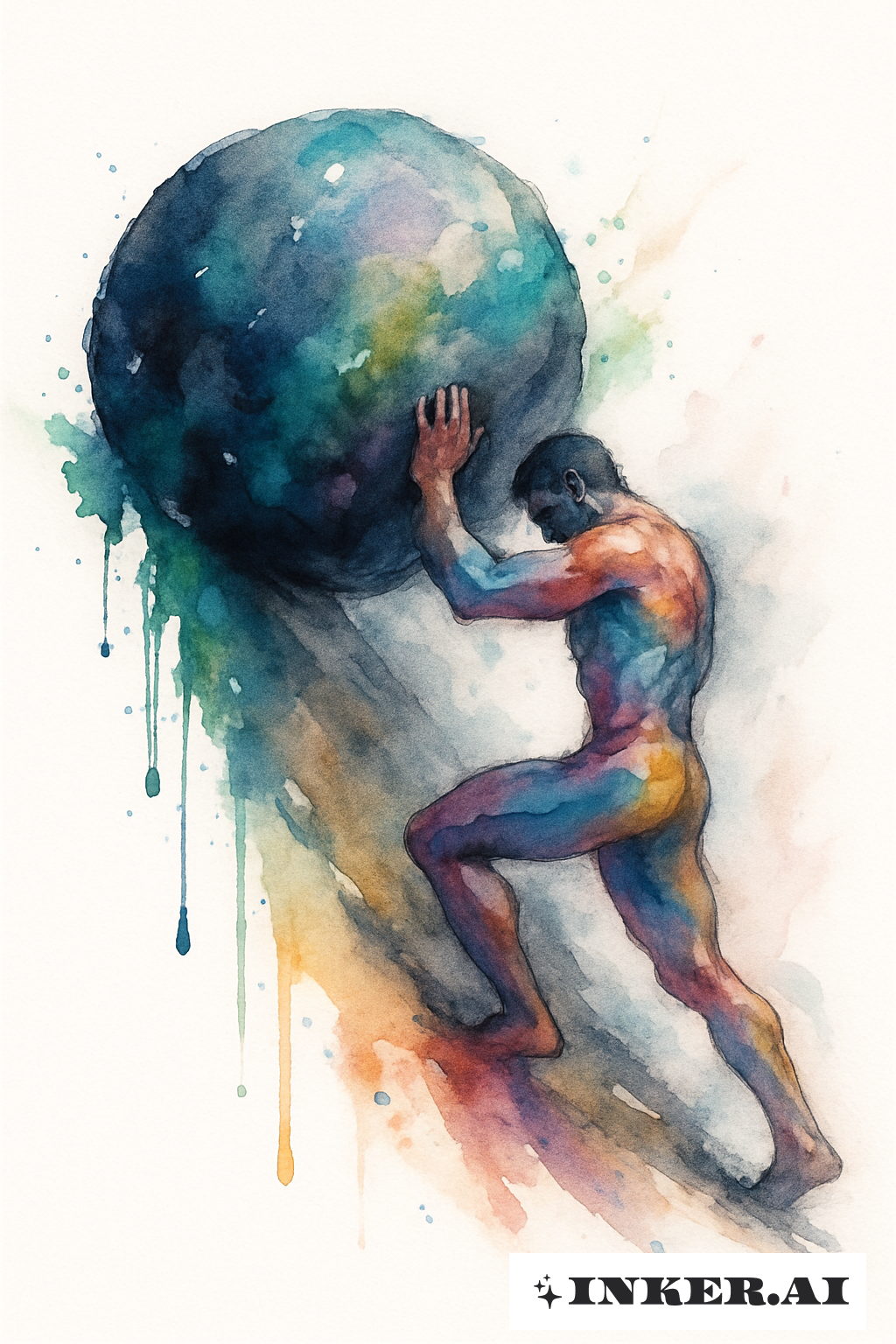
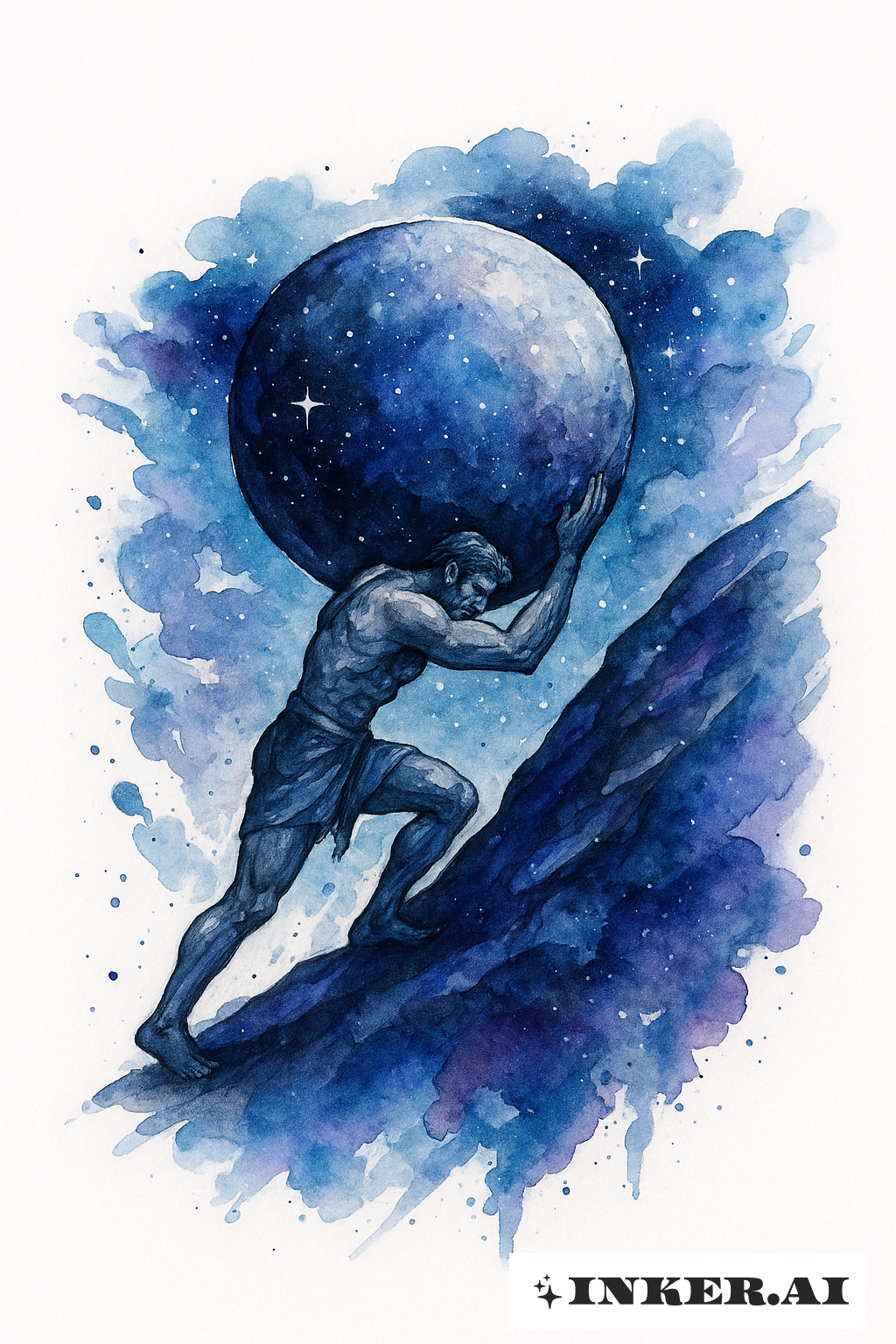
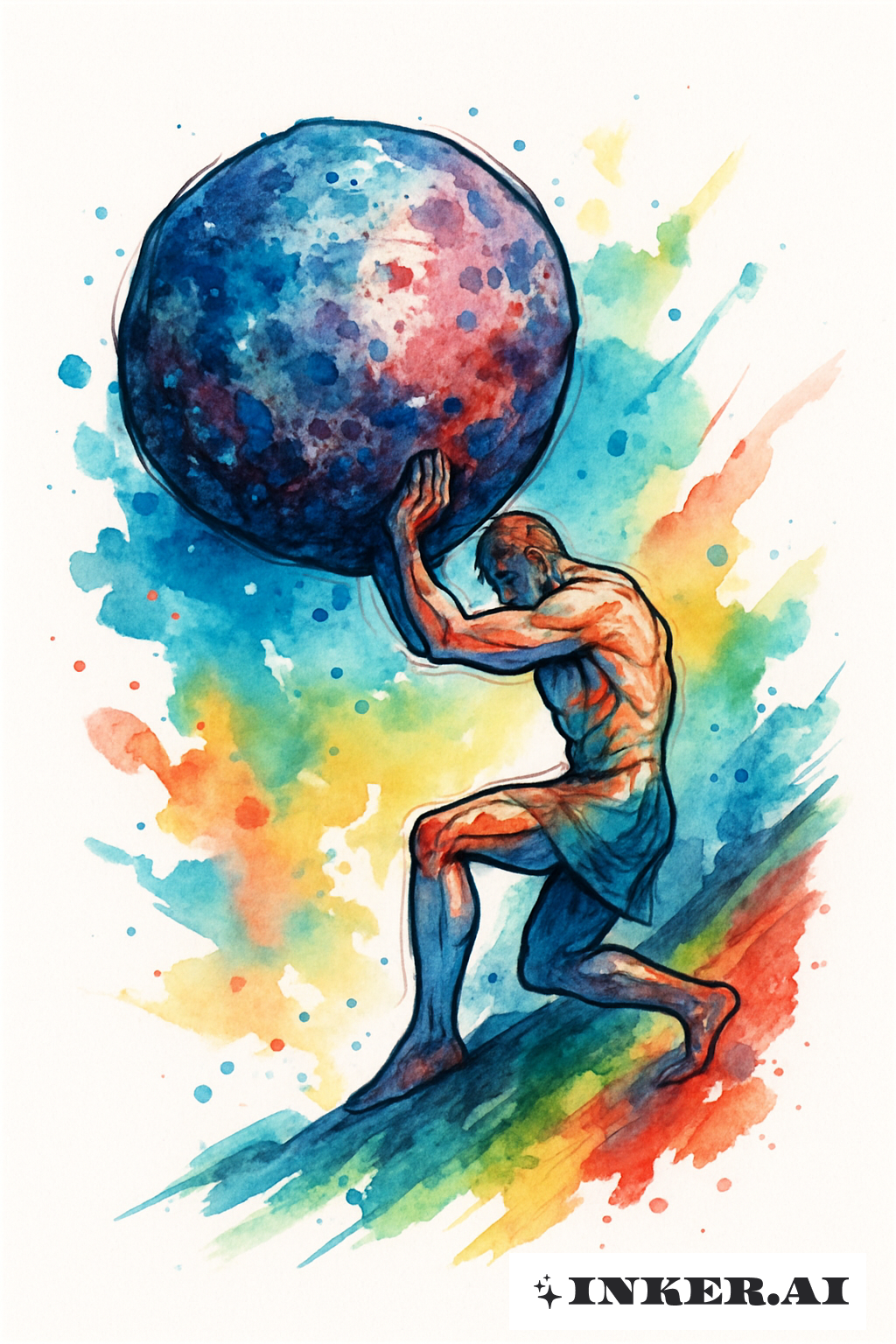
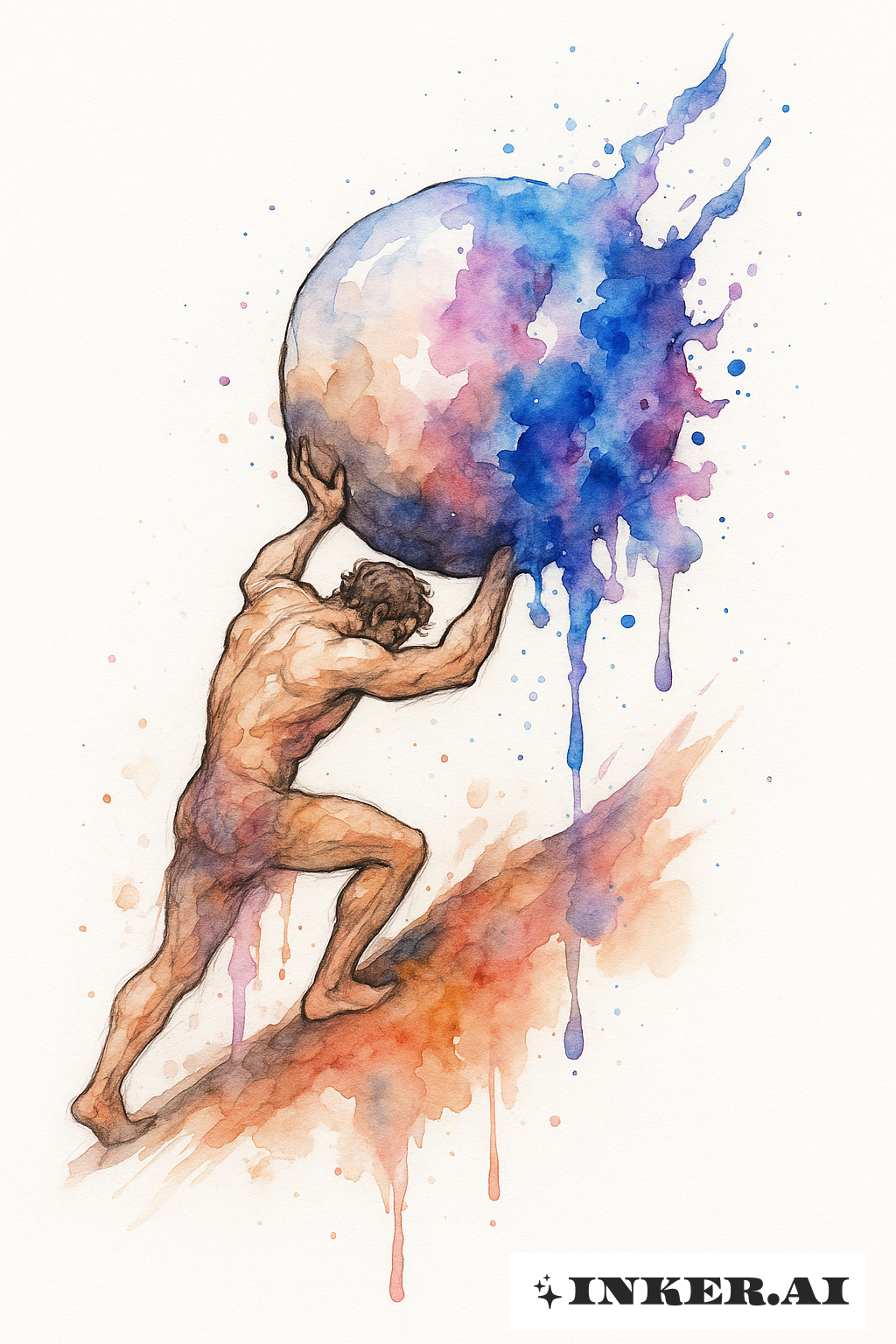
Artistically, the tattoo draws from Noh theater masks and classical sculpture to explore the intersection of mask and burden. The concept began with the idea of a face that both contains and manifests suffering, then evolved into a composition where weight and expression are inseparable. Textures—stone pitting, lacquered mask sheen, and flowing ink wash—play against each other to heighten contrast. The uphill motion became the central metaphor: repeated strokes and layered shading suggest the grind of habit and the dignity found in persistent striving. Color is used sparingly to preserve the archetypal, almost talismanic quality of the image.