Cultural Meaning Of Hannya Mask Typography Trash Polka Tattoo Design
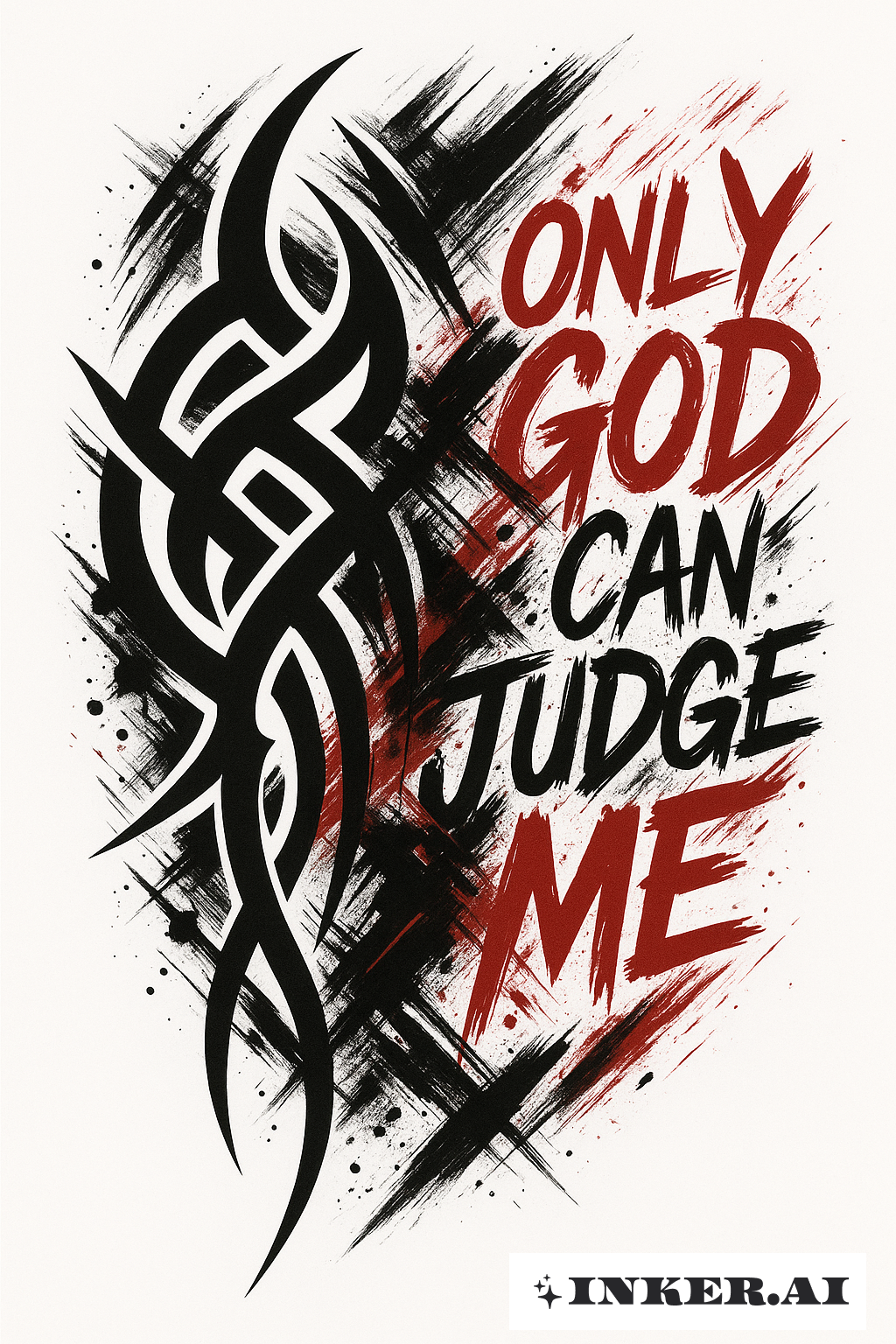
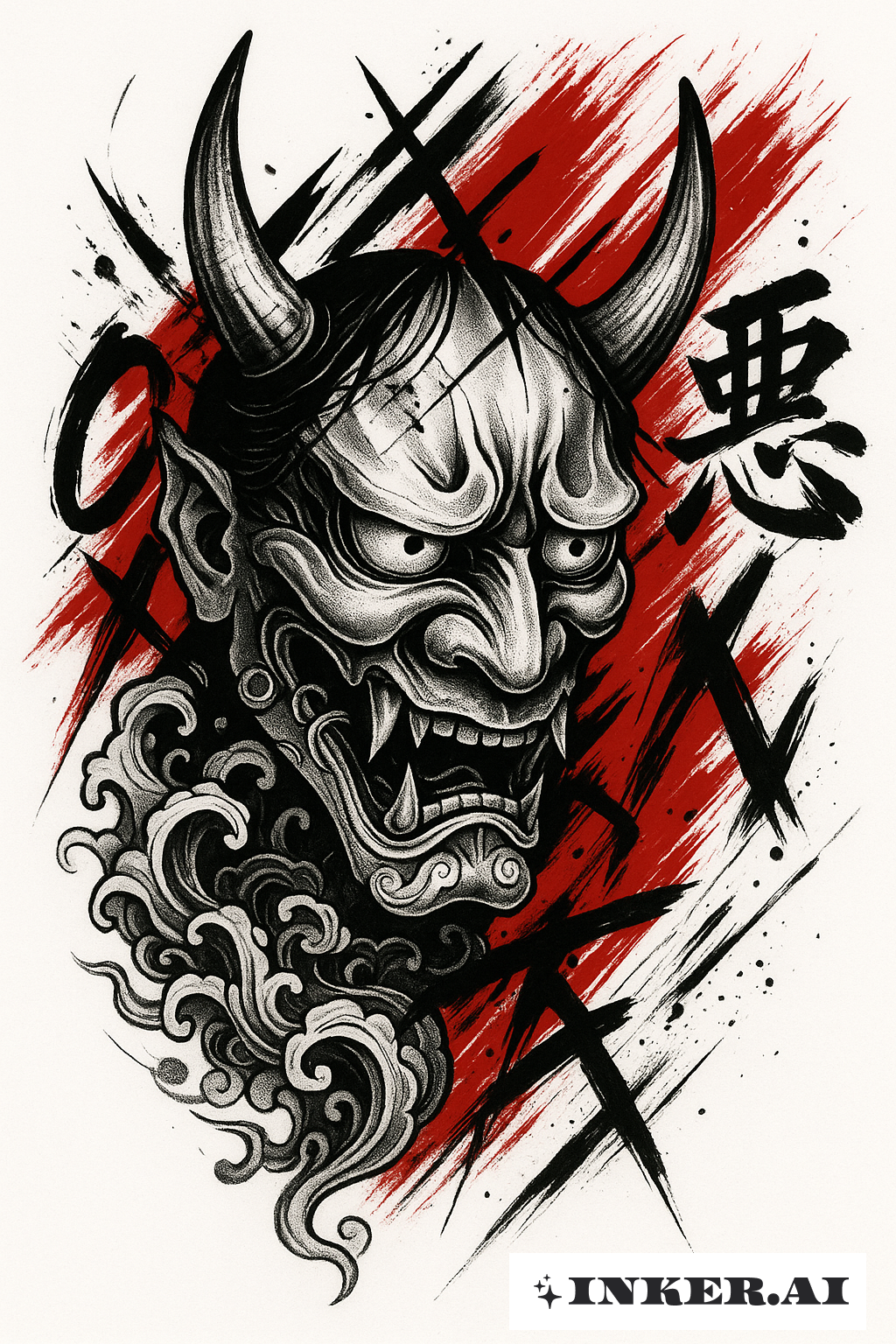
The Hannya mask comes from Japanese Noh theater and represents a woman transformed by jealousy, grief, anger, and emotional torment. Although its expression appears demonic, the mask also carries sadness and vulnerability, revealing the complicated nature of human emotion. Its horns suggest spiritual corruption, while the metallic eyes and exposed teeth communicate rage, warning, and fierce self-protection. In tattoo symbolism, the Hannya can represent the struggle to confront darker feelings rather than hide them. It may also stand for resilience, emotional intensity, protection from betrayal, or the transformation of pain into personal strength. The red-and-black palette heightens these ideas: red can suggest passion, blood, anger, and vitality, while black adds mystery, mourning, authority, and permanence. Typography introduces a personal or confrontational voice, making the image feel like a visual statement as well as a character portrait. Within Japanese tattoo style, the traditional mask gains a modern, rebellious edge through fragmented graphics and high contrast. As Trash Polka tattoo ideas, such compositions often symbolize the tension between order and chaos, heritage and individuality, beauty and brutality.
Design Inspiration Of Hannya Mask Typography Trash Polka Tattoo Design
The concept draws from the dramatic emotional language of Noh theater, where a single mask communicates an entire psychological story through subtle changes in angle and shadow. It reimagines that traditional intensity through the visual vocabulary of underground posters, distressed print, graffiti, and editorial typography. The red-and-black palette creates immediate impact, while splashes, fragments, and hard-edged lettering suggest conflict, motion, and emotional rupture. The result is a meeting point between disciplined Japanese iconography and deliberately raw contemporary composition.