Cultural Meaning Of Hannya Mask With A Broken Rosary Tattoo Design
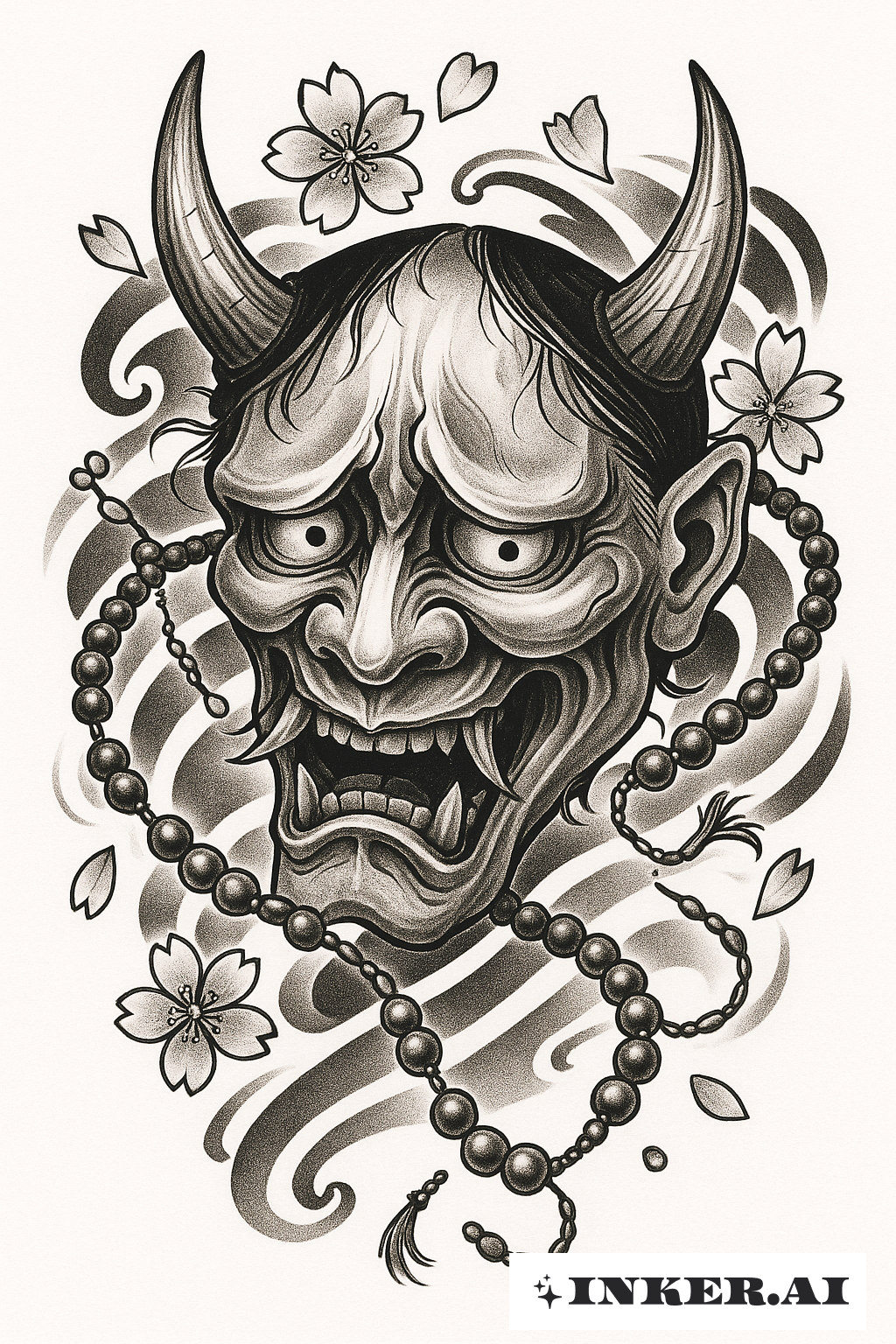
The Hannya mask carries a layered cultural history: in Noh theater it symbolizes a woman turned vengeful demon through jealousy and sorrow, and in tattoo culture it often represents transformation, protection, or the darker side of human emotion. The broken rosary threaded through the mask introduces a stark counterpoint—beads and a fractured cross suggest interrupted faith, repentance, or a broken vow. Together they speak to dualities: rage versus remorse, performance versus private grief, and the collision of different spiritual motifs. Placing these elements in a Japanese tattoo style acknowledges the mask’s theatrical roots while inviting reinterpretation. As a concept it fits within broader Rosary tattoo ideas that explore faith under strain, making the image both a dramatic visual statement and a meditative emblem of inner conflict and potential redemption.
Design Inspiration Of Hannya Mask With A Broken Rosary Tattoo Design
This piece is inspired by Noh theater masks and ukiyo-e portraiture, where exaggerated expression tells a whole story. The artist imagined a face that still speaks despite being fragmented—horns and teeth carved like wood, rosary beads snapped mid-prayer. Color choices lean on traditional tattoo palettes: blood reds for passion, indigo for shadows, and muted gold for aging. Textural contrasts—bold outlines against delicate beadwork—create tension, while drifting leaves and wind lines suggest passage of time. The broken rosary transforms an accessory into narrative fuel, turning pain and penance into a striking visual saga.