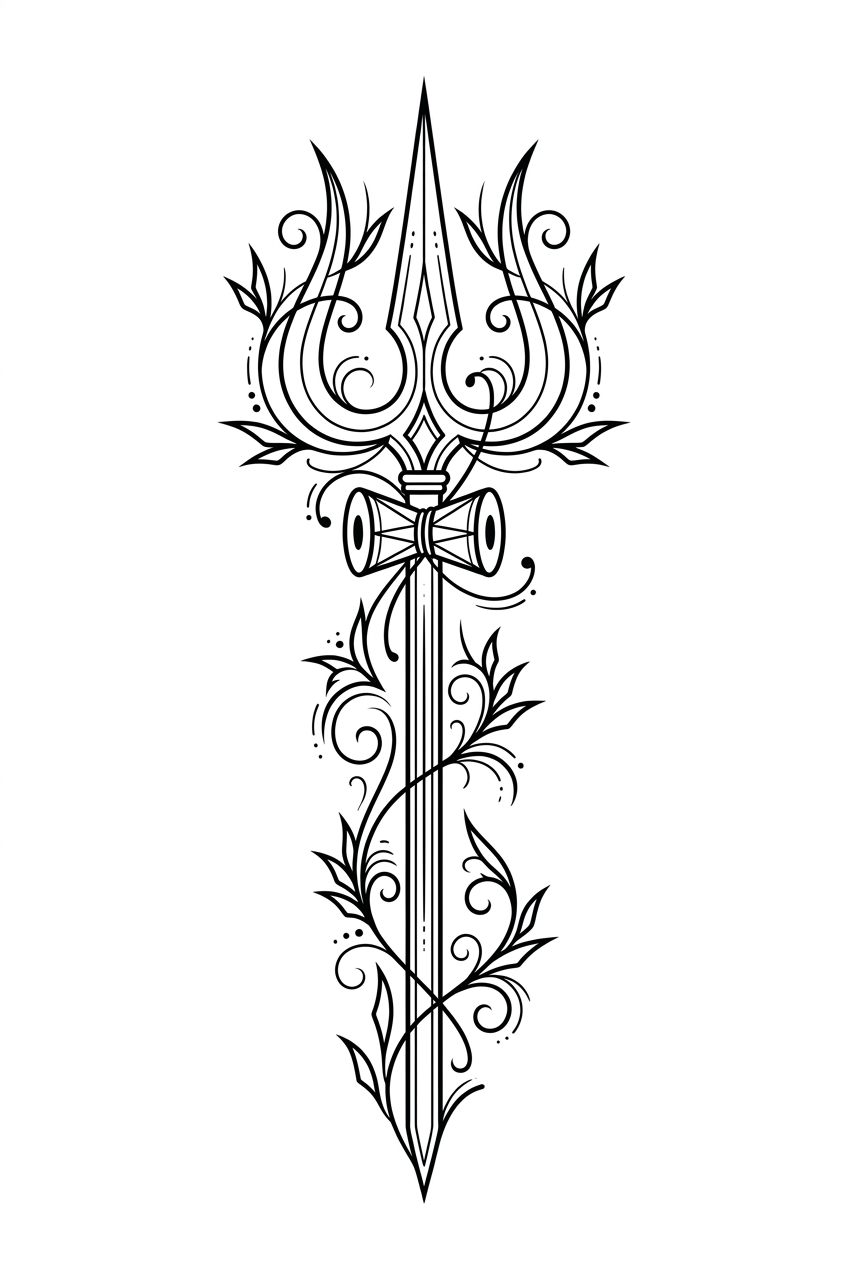
Cultural Meaning Of Trishul Wrapped in Ornamental Vines Tattoo Design
This tattoo embodies a potent blend of symbolic elements used in various traditions, particularly within Hindu culture. The Trishul, a significant symbol, represents Shiva, the destroyer and regenerator, making the Trishul tattoo idea a powerful a theme. In contrast, the ornamental tattoo style of intertwining vines softens and complements its formidable nature. These vines symbolize growth, connection, and eternity, creating a juxtaposition with the Trishul's fierceness that implies a balance between creation and destruction, life and death, and order and chaos. Through its combination of cultural motifs, the tattoo reflects an ongoing journey of spiritual transformation and resilience.
Design Inspiration Of Trishul Wrapped in Ornamental Vines Tattoo Design
The Trishul wrapped in ornamental vines draws inspiration from traditional Hindu iconography and the beauty of nature. It’s inspired by the symbolic significance of Shiva's Trishul, representing divine power and the cyclical nature of life. The ornamental aspect derives from decorative art traditions, seeking to interlace strength with delicate beauty, reflecting how elements from history and spirituality can blend seamlessly with nature’s intricate designs.