Cultural Meaning Of Hannya Mask Behind The Ankh Tattoo Design
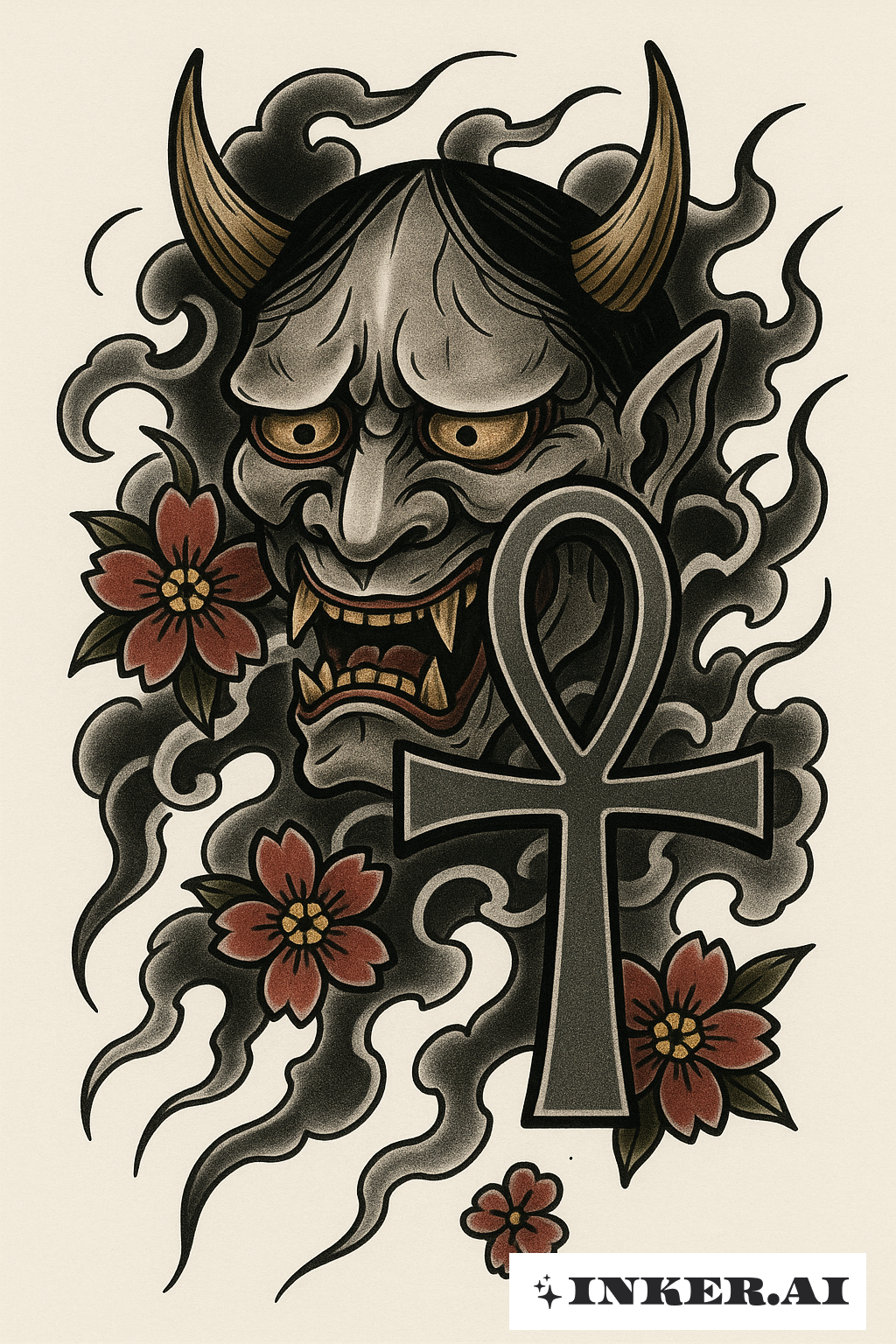
This composition layers two powerful symbols to create a story of protection, transformation and the tension between human and supernatural. The Hannya face traditionally represents a tormented, jealous spirit and—when inked—can symbolize the wearer’s confrontation with inner darkness or the desire to transform pain into strength. The looped cross behind the mask reads as a sign of eternal life and balance, an emblem that reframes the mask’s fury within a context of renewal. Using motifs drawn from Japanese tattoo style grounds the design in a visual language of waves, wind bars and floral cycles, reinforcing ideas of impermanence and resilience. Together, the mask and the cross suggest that confronting inner demons can lead to rebirth, protection or spiritual continuity. Subtle color choices—deep blacks with crimson accents—heighten the emotional drama while traditional linework keeps the image readable from a distance.
Design Inspiration Of Hannya Mask Behind The Ankh Tattoo Design
The tattoo draws inspiration from classic Noh theatre masks and ancient iconography, imagining a narrative where a haunted spirit stands guard over the threshold between life and afterlife. Artistic influences include sumi ink techniques for bold contrasts, woodblock composition for strong silhouettes, and ceremonial jewelry motifs that inform the cross’s form. The goal is a piece that reads as both a shrine talisman and a theatrical portrait, balancing raw emotion with refined, ornamental details to make the mythic feel personal.